
Last updated August 26, 2026
Free on-site gate assessment - hinges, posts, and your LiftMaster or Nice gate operator checked before anything is quoted
The assessment is free and the quote is the invoice.
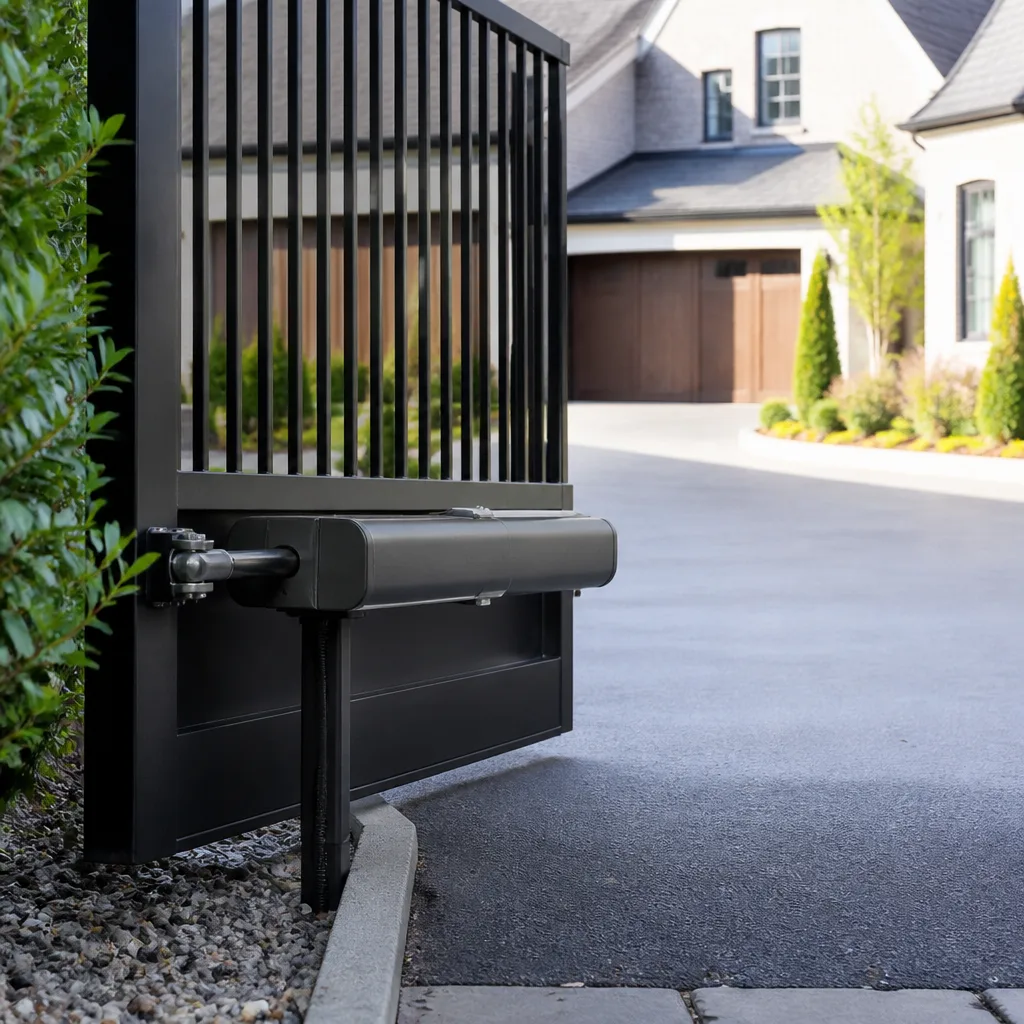
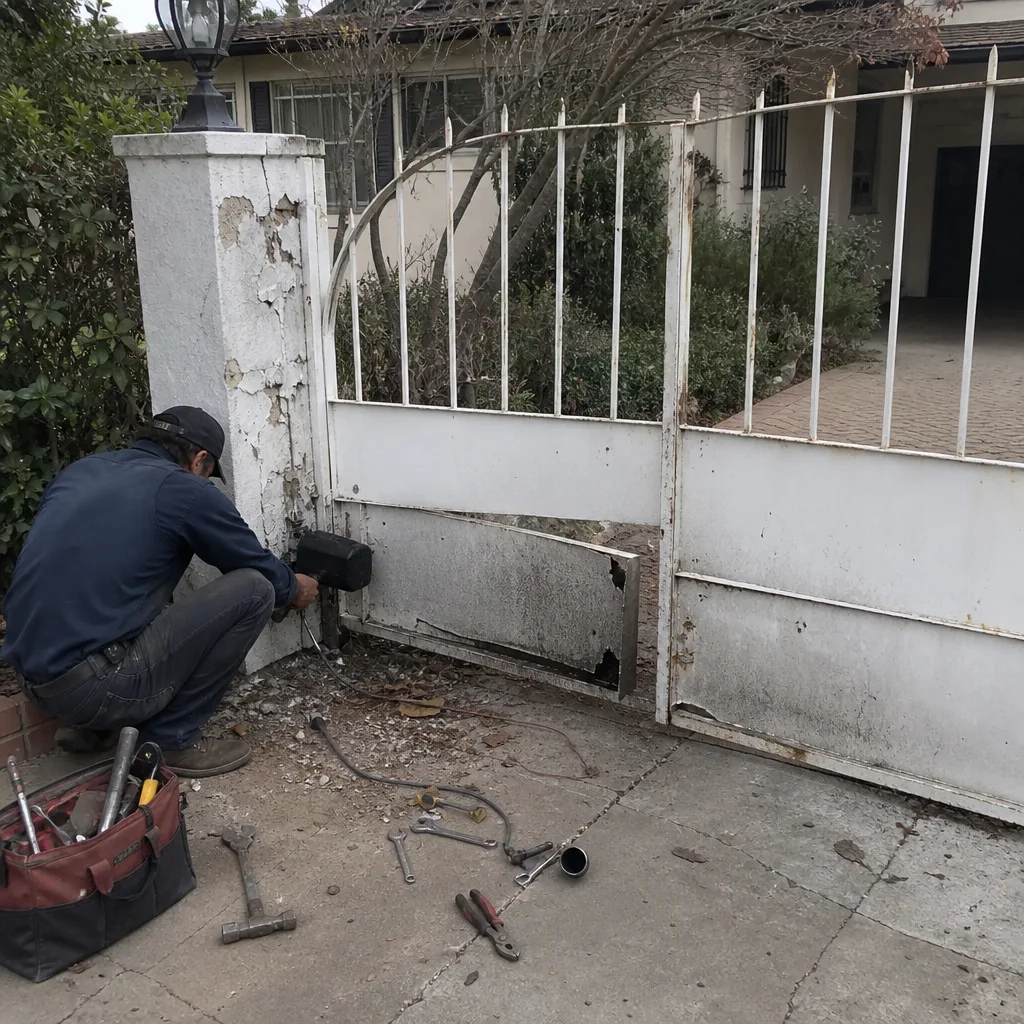 Before
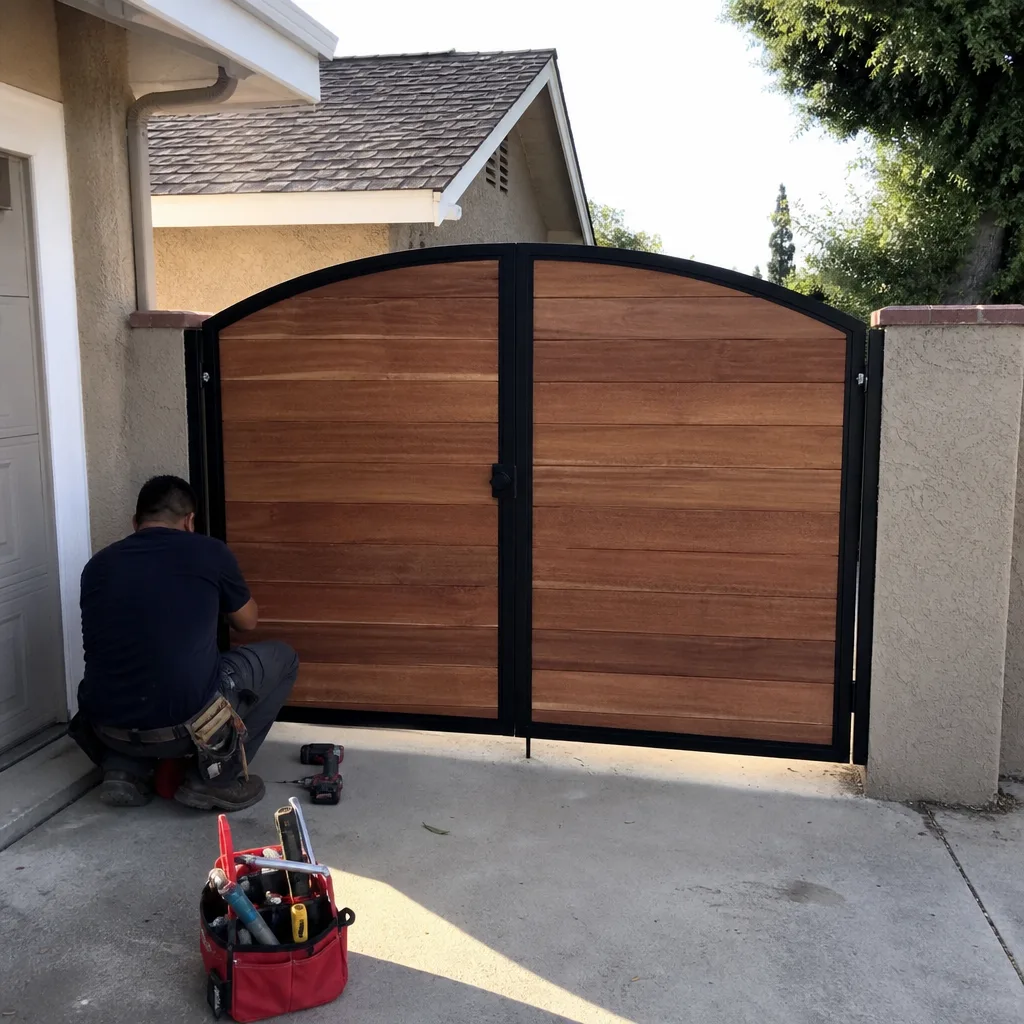 After
After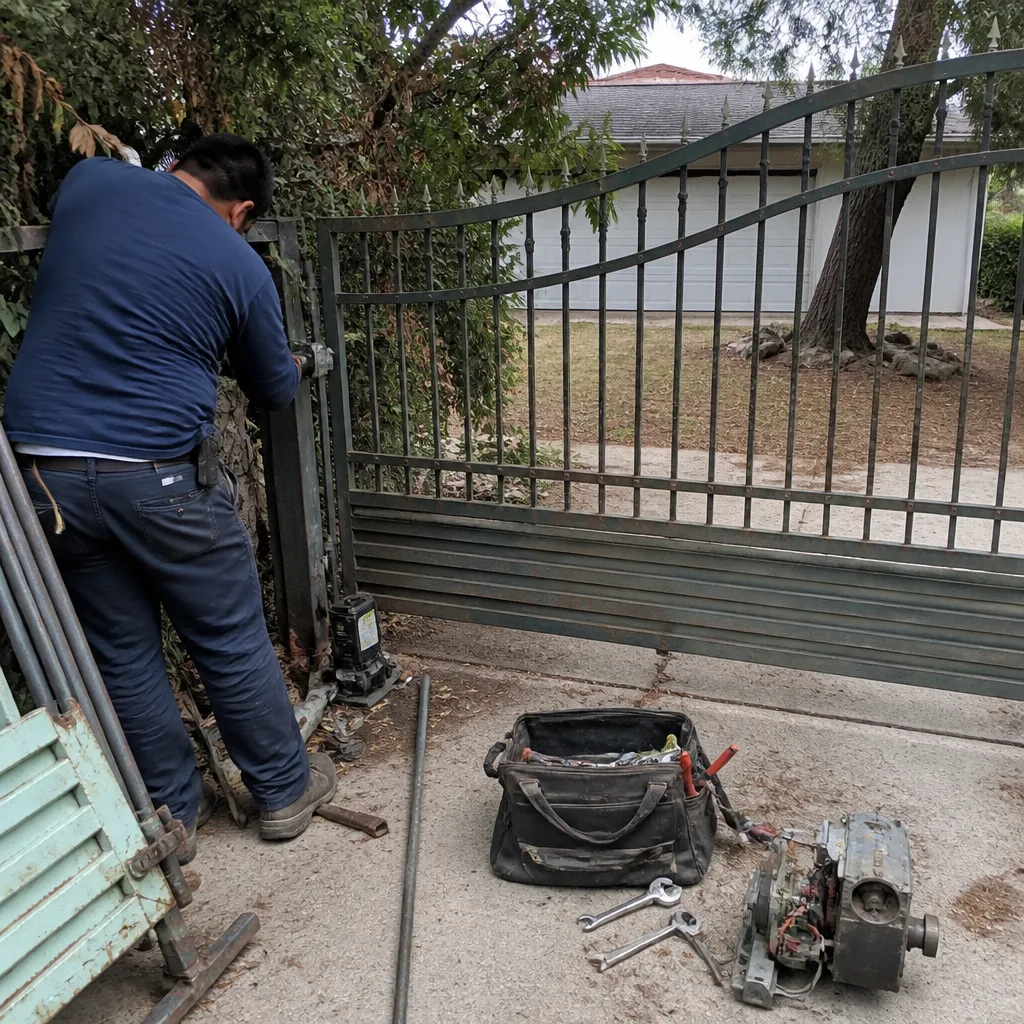 Before
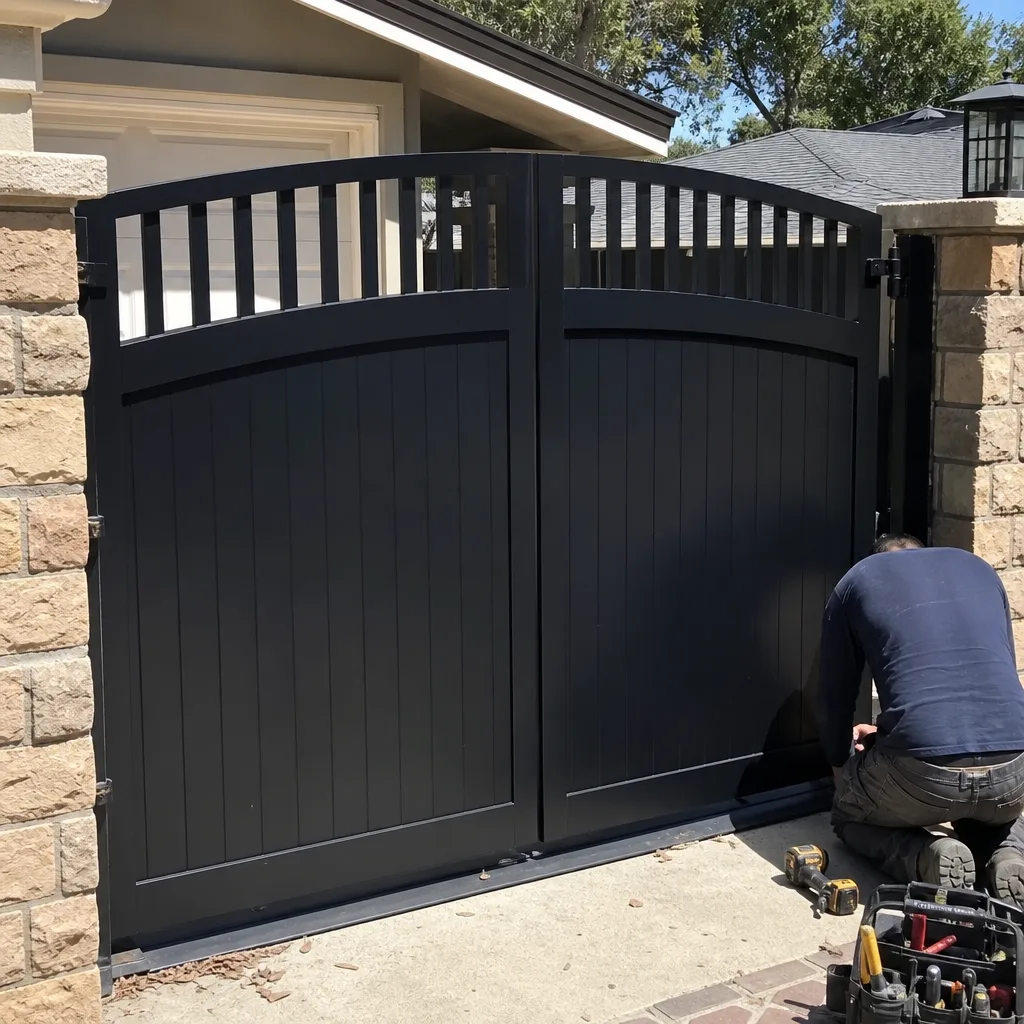 After
After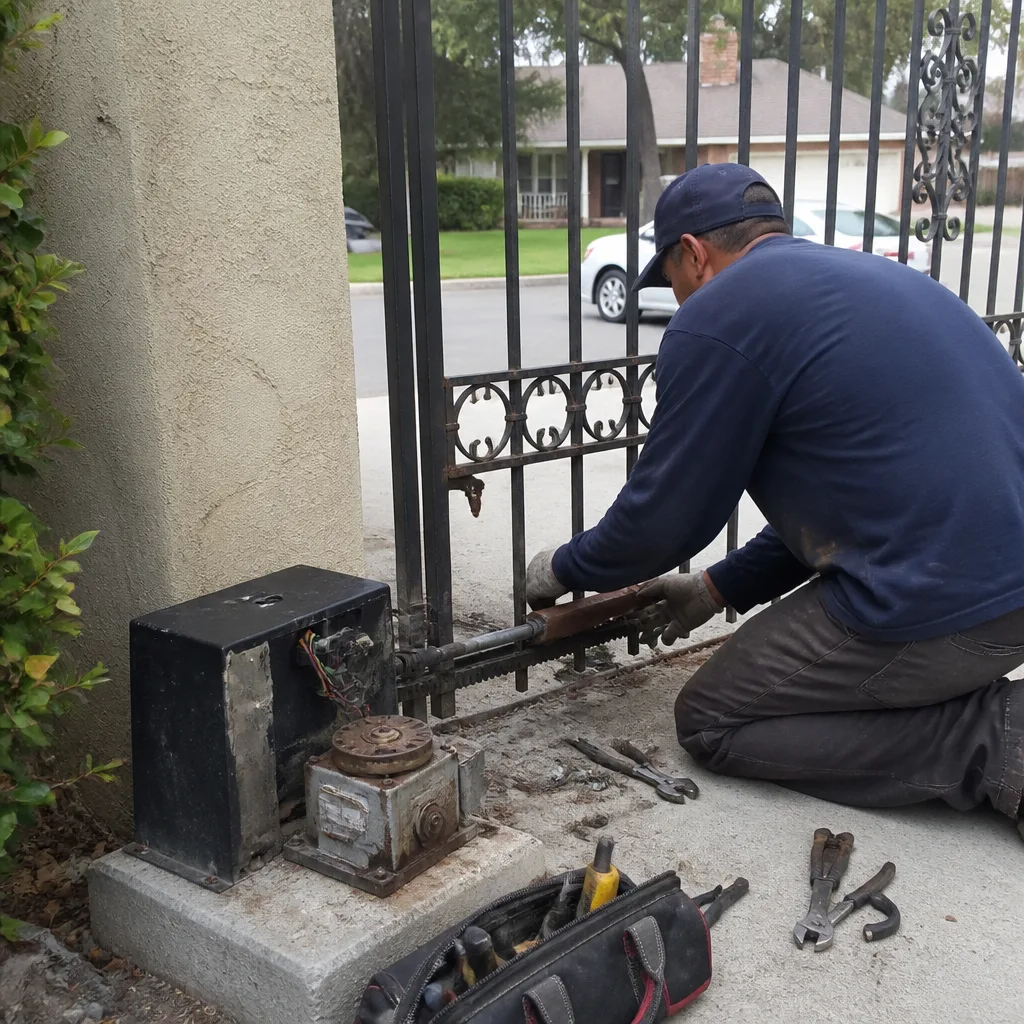 Before
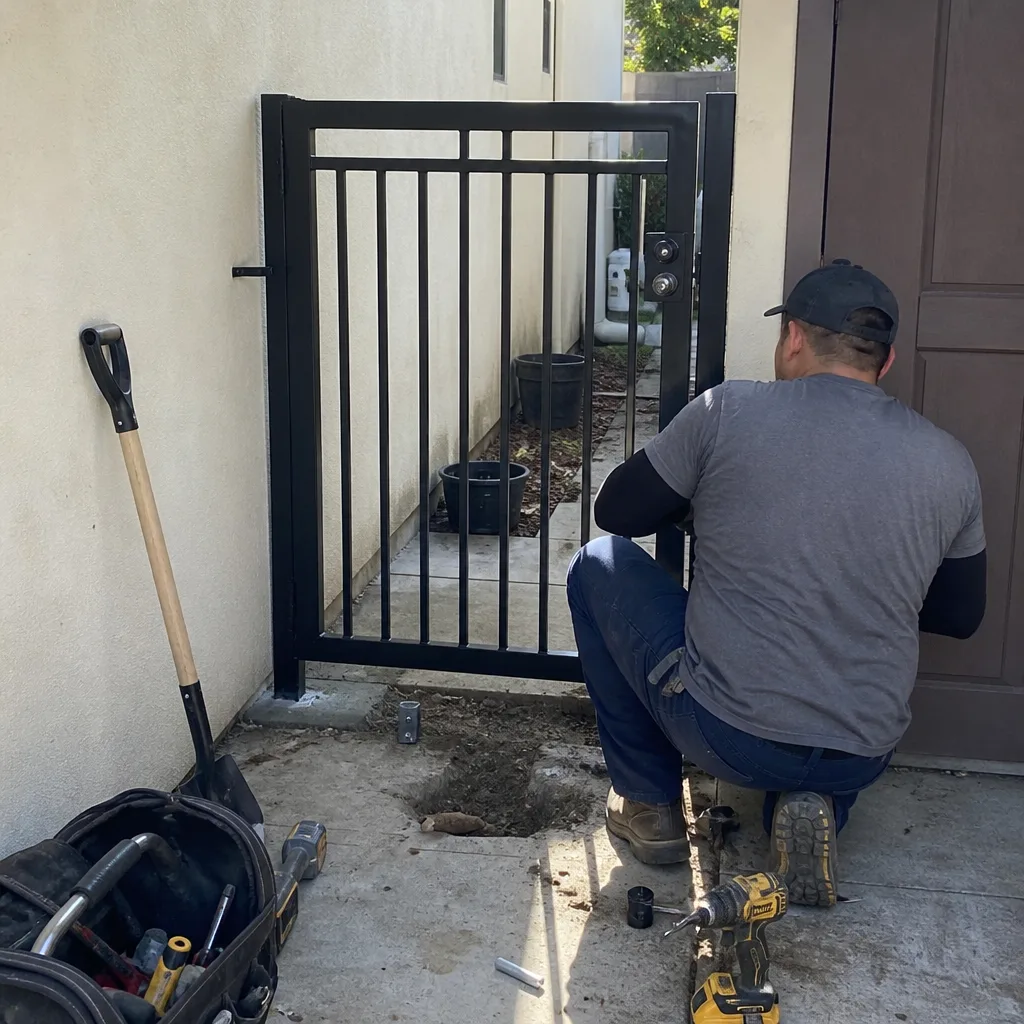 After
AfterThe Complete Guide to Gate Repair in Arcadia
Most gates in Arcadia don’t fail because they’re old. They fail because the ground under them moves more than anyone expects, the water feeding the landscape is harder than anyone accounts for, and somewhere along the line somebody installed a motor that was always going to be too small. We’ve been called out to the same house twice in one year often enough that we started keeping notes on why. The first call is usually a symptom. The second call is the actual problem, still sitting there because the first repair was a patch dressed up as a solution. This guide covers what genuinely goes wrong with gates in Arcadia, why the local soil and water make it worse, and what a real fix should look like when the truck leaves your driveway. For more guides & resources, visit our blog.
Quick Answer
Gate repair in Arcadia typically costs between $180 and $950 depending on whether you’re dealing with a sagging panel, a failing motor, or a structural weld at the hinge post-see our Gate Repair Cost Breakdown: The Arcadia Homeowner’s Reference for 2026 for full details. Most repairs take under three hours, and the most common underlying cause here along the San Gabriel foothills is soil settlement that shifts posts and overworks motors. A gate that’s diagnosed correctly the first time will cost less than one that gets a cosmetic patch and fails again in eight months.
Table of Contents
- Why Arcadia’s Soil Is the Quiet Problem
- The Rubber Wheel Problem Almost Nobody Mentions
- The Difference Between a Cosmetic Weld and a Structural Weld
- Hard Water, Rust, and Hinge Points
- The Five Most Common Gate Failures We See
- What “Repaired” Should Actually Look Like
- Common Mistakes to Avoid
- When to Call a Professional
- Frequently Asked Questions
Why Arcadia’s Soil Is the Quiet Problem
Most gate repair guides are written for flat land. Arcadia is not flat land. The city sits directly against the San Gabriel foothills, and the soil here carries a lot of silt and decomposed granite that expands when wet and contracts when dry. Homeowners see a gate that drags on the latch side and assume the panel is bent. In our experience, the panel is usually straight. The post has moved.
Here’s what happens. During the rainy season, water saturates the ground around the hinge post. The soil swells. The post gets pushed a fraction of an inch out of plumb. Then summer comes, the ground dries and settles, and the post leans just enough that the gate no longer sits square in its frame. The hinges take the strain. The latch catches wrong. The motor starts laboring against geometry that gets worse every month.
The fix is not to shim the gate. Shimming a gate on a leaning post is like adjusting the mirror on a car that’s pulling to the right. What’s needed is a post that has been re-set and re-bedded in place, usually with additional concrete and a longer section of post sunk deeper than the original. Arcadia’s specific soil composition means post holes here need to go below the expansive layer. A post set shallow will move again.
We use the same diagnostic on every call where a gate drags or binds. Check the panel with a straight edge first. If the panel is straight and the gap at the top of the gate is wider than the gap at the bottom, the post is out. The ground did it. The fix starts underground.
The Rubber Wheel Problem Almost Nobody Mentions
Many rolling gates in Arcadia ride on a rubber wheel at the free end. Rubber wheels are quiet and inexpensive, which is why manufacturers ship them as standard. They also compress over time, especially when the gate is heavy and the driveway has any slope. And several parts of Arcadia do slope as the land rises toward the mountains.
When the wheel compresses, the gate drops. The latch no longer lines up. The motor has to push harder to overcome the sag. In some cases, the wheel flattens on one side and creates a rhythmic thump every time the gate cycles. If you’ve ever heard your gate thumping, that’s the wheel, not the motor.
The real fix on a heavy gate is to replace the rubber wheel with a steel wheel and add a proper floating support that carries weight through the post instead of the wheel alone. A steel wheel doesn’t compress, and it doesn’t develop a flat spot. On lighter pedestrian gates, a new rubber wheel is fine, but it should be rated for the actual weight of the gate, not whatever came in the original box.
This matters in Arcadia because many homes here were built decades ago with original steel frames that are heavier than modern aluminum gates. When we install a new opener on an old steel gate, we always check the wheel rating first. A new motor on a bad wheel is a motor that will fail early.
The Difference Between a Cosmetic Weld and a Structural Weld
Not all welds are equal, and you can’t always tell the difference from the ground. A cosmetic weld holds two pieces of metal together so the joint looks closed. A structural weld transfers load. When a gate cracks at a hinge point, the crack is evidence that the weld was absorbing stress it was never designed to handle. The fix requires more than re-closing the crack.
We see this constantly in Arcadia. The original gate was fabricated off-site, welded in a jig, and shipped out. Some of those production welds were never meant to carry the load of a gate that gets opened and closed four or six times a day for twenty years. Eventually, the metal fatigues and the weld cracks. When someone runs a bead over the crack without addressing why it cracked, that’s a cosmetic weld. It will crack again. Read our DIY vs Professional Gate Repair: The Arcadia Homeowner’s Decision Guide to understand why this matters.
A structural weld repair takes several things into account. The joint has to be cleaned down to bare metal, not welded over paint or rust. The load path needs to be re-evaluated. Sometimes the right fix is to add a gusset plate rather than just re-welding the original joint. And the weld itself needs proper penetration, which you can’t verify from the outside. What you can verify is this: when we weld on site in your driveway, you can watch the process. That’s the difference between getting a real repair and hoping whoever took your gate away did it right.
We offer on-site welding specifically because it changes the whole transaction. The gate never leaves your driveway. You see the work. If the weld fails within 90 days, you call and we make it right. That’s the promise on every job, and it’s in writing.
Hard Water, Rust, and Hinge Points
Arcadia’s municipal water supply carries a significant mineral load. If you’ve ever cleaned the scale off a faucet or shower head, you know what we mean. That same water ends up on irrigation systems, and irrigation systems often spray near gates. The result is mineral buildup and accelerated corrosion at hinge points, especially on older steel gates.
The pattern is consistent. A gate that gets hit by sprinkler overspray shows rust at the bottom hinge first. The mineral deposits hold moisture against the metal. The paint bubbles. The hinge pin seizes. The gate gets harder to move, the motor works harder, and the owner assumes the motor is failing when the real problem is rust at the hinge.
A proper treatment is not a coat of spray paint. It involves removing the rust mechanically, treating the bare metal, applying a rust-inhibiting primer, and then repainting with a finish that can handle sun exposure and water contact. On moving parts, the hinge pin needs to be cleaned or replaced, not just greased. Grease over rust is a bandage.
The same hard water shortens the life of gate motors less directly but just as consistently. When a gate binds because the hinge has corroded, the motor draws more current to move it. Over months, that extra current shortens motor life. A homeowner thinks the motor died early because it was a bad motor. In reality, a corroded hinge killed it.
We’ve also seen hard water clog and damage the keypads and card readers on access control systems where they sit in the path of sprinkler spray. The fix there isn’t complicated, but it needs to be caught early. When we service access control in Arcadia, we always check for overspray first.
The Five Most Common Gate Failures We See
After more than two decades of service calls in Arcadia, five failures account for the vast majority of what we fix. Here’s what they are and what they actually take to repair.
- Sagging or dragging gate panel. Almost always a hinge post that has moved or a hinge that has worn. The panel itself is usually fine. The fix means checking the post with a level, re-bedding the post if it has moved, and replacing hinges rather than adjusting the panel to hang crooked.
- Motor runs but the gate doesn’t move, or moves halfway and stops. This can be a stripped gear inside the motor, a damaged drive chain or belt, or a gate that’s binding due to hinge or wheel problems. The motor should be disconnected and the gate moved by hand to see if it moves freely. If it doesn’t, the motor was never the problem.
- Gate slams or drifts when the motor releases. On swing gates, this points to a failing clutch or a broken limit spring inside the opener. On slide gates, it’s often a brake that isn’t holding. It’s a safety issue because a drifting gate can close on a person or a car.
- Keypad, remote, or intercom stops working. Sometimes it’s the battery. Sometimes it’s water intrusion at the keypad. Sometimes the control board has failed. In Arcadia’s heat, control boards inside black metal boxes can cook. We always check the simplest cause first before recommending any board replacement.
- Gate comes off the track or the wheels jump the rail. On slide gates, this is usually a wheel that’s worn or a track that’s shifted. On cantilever gates, it’s roller trucks that have rusted and seized. If the gate has jumped the track, the opening system should be shut off and the gate locked in place until it can be repaired, because an unstable gate is genuinely dangerous.
One more thing worth saying. When a gate in Arcadia fails during a heat wave in August, it’s rarely because of the heat alone. The heat exposed a problem that had been building for months. A motor that’s been drawing too much current due to a corroded hinge is going to die on the hottest day of the year, not the mildest. That’s how it works.
What “Repaired” Should Actually Look Like
When the person who fixed your gate is packing up, you should be able to check a few things yourself. Not because you need to be a gate expert, but because the benchmarks for a real repair are visible to a homeowner.
- The gate should move by hand, with the opener disengaged, without needing force. If you have to muscle it, the hinge or track problem wasn’t fixed.
- The gate should sit square in its opening. Same gap at the top as at the bottom on a swing gate. No dragging on a slide gate.
- The latch should catch without being lifted or kicked. If you have to help it, the alignment wasn’t actually corrected.
- Any new weld should look like a continuous bead, not a row of spots. A row of spots is a tack weld, and a tack weld isn’t a repair.
- The motor should be quiet. A grinding, whining, or thumping noise means something is still binding.
- Your keypad or remote should work from the same distance it did before the repair. If the range got shorter, the antenna or receiver may have been disturbed, and that matters for convenience and for safety.
If those checks pass, you got a real repair. If they don’t, make the call before the technician leaves. We tell every homeowner we work with the same thing: check the gate before we pull out of the driveway. We’d rather answer a question on the spot than come back for something a homeowner noticed after we left.
Common Mistakes to Avoid
- Replacing the motor without checking the gate. If the gate is hard to move by hand, a new motor will fail early. The motor is usually the victim, not the cause. Always have the gate itself evaluated before replacing the opener.
- Shimming a sagging gate instead of fixing the post. Shims correct the symptom. The post is still leaning, and it will keep moving. Fix the panel without the post and you’ll fix it twice.
- Spray-painting over rust. Without mechanical rust removal and a proper primer, the rust comes back through the new paint within a year. In Arcadia’s hard-water environment, it’ll probably come back faster than that.
- Waiting until a gate completely stops to call. If your gate is slower than it used to be, louder than it used to be, or doesn’t land on the latch cleanly, something is already failing. Early calls are cheaper calls.
- Buying the cheapest opener and expecting it to last. A gate motor is a piece of mechanical equipment that works outdoors in the sun and rain for years. The cheapest unit is cheap for a reason. It’s often undersized for the gate it’s asked to move.
- Not checking whether a company actually welds or just swaps parts. Some repair outfits won’t weld at all. If a weld is cracked, they’ll quote you for a whole new gate. A repair-first company will tell you the weld can be fixed on site and show you the bead when it’s done.
When to Call a Professional
Call a professional when a gate falls off its track, when a swing gate sags enough to drag, when a motor runs but won’t move the gate, or when a weld has cracked anywhere on the frame. Gate panels are heavy. A swing gate that comes off its hinge can fall on a person. A slide gate that jumps its track can tip and crush whatever is underneath. This isn’t work to improvise. If you’re in Arcadia and your gate has failed, Gatewood Fence & Gate offers Gate Repair services with free estimates. You can reach us at (626) 628-9548. We answer the phone with a live person, day or night. If you’ve got a written estimate from another company, we’ll give you a free second opinion.
Frequently Asked Questions
Gate repair in Arcadia typically runs between $180 and $950, depending on whether the job is a simple hinge replacement, a motor repair, or a structural weld at the hinge post. Hinge and alignment work is on the lower end. Motor and control board work lands in the middle. Full post re-bedding or structural welding is on the higher end. The price is quoted and agreed before any work starts. Call (626) 628-9548 for an exact quote, and remember every estimate is free.
In many cases, yes. We stock the most common hinge assemblies, wheels, and opener parts for the brands we service, including Ghost Controls and DoorKing, so we can often repair a gate on the first visit. If your gate is stuck open or stuck closed and it’s a safety issue, call right away at (626) 628-9548 and we’ll get to it as fast as we can.
A quality gate opener that’s properly matched to the gate and well maintained should last 10 to 15 years in Arcadia’s climate. The biggest factors that shorten motor life here are heat inside the control box, hard-water corrosion at the hinges that makes the motor work harder, and motors that were undersized at installation. We see many openers from the 2020 to 2022 supply crunch fail early because contractors installed what they could get, not what the gate needed.
We service nine major gate brands including LiftMaster, FAAC, BFT, Linear, Viking, Ghost Controls, DoorKing, Elite, and Mighty Mule. If you’re not sure what brand you have, check the motor housing or the control board inside the opener box. You can also call us and describe what you see, and we’ll help you identify it.
A rhythmic thump that matches the gate’s movement usually means a flat spot on a rubber support wheel. The gate rolls over that flat spot on every cycle, and the thump is the wheel fighting the rotation instead of rolling through it. The fix is a new wheel, and on a heavy gate, a steel wheel is the better choice. Call (626) 628-9548 and we’ll diagnose it on site.
Repairs that don’t change the structure, height, or location of the gate generally don’t require a permit. If you’re replacing the entire gate or moving a post, Arcadia’s building department may want a permit, especially for an automated gate that has safety edges and photo eyes. We can walk you through what your specific project needs before any work is scheduled.
The single best prevention is keeping irrigation overspray off the gate. In Arcadia, that’s often the difference between a gate that lasts twenty years and one that rusts at the hinges in eight. Beyond that, having the hinges cleaned and properly primed when rust first appears will stop it cold. A spray paint cover will not. For a full look at what a proper gate repair involves in this area, read our gate repair service page for Arcadia.
The Bottom Line
In Arcadia, a working gate means the posts are straight in soil that moves, the hinges are clean in water that’s hard, and the motor is the right size for the gate it’s driving. Most repairs fail early because one of those three things was ignored. Get the post right, the corrosion controlled, and the motor matched, and a gate will run for a decade or more. When something does go wrong, choose a repair that fixes the cause instead of covering the symptom. If you’d like an honest diagnosis from a local shop that’s been at this since 2001, call Gatewood Fence & Gate at (626) 628-9548. We’ll give you a straight answer and a free estimate. For more on who we are and what we do, start at the Gatewood Fence & Gate home page, or read about full gate installation in Arcadia and gate motor and opener service.
Written by Hal Gatewood, Owner at Gatewood Fence & Gate, serving Arcadia since 2001.