
Last updated August 26, 2026
Free on-site gate assessment - hinges, posts, and your LiftMaster or Nice gate operator checked before anything is quoted
The assessment is free and the quote is the invoice.
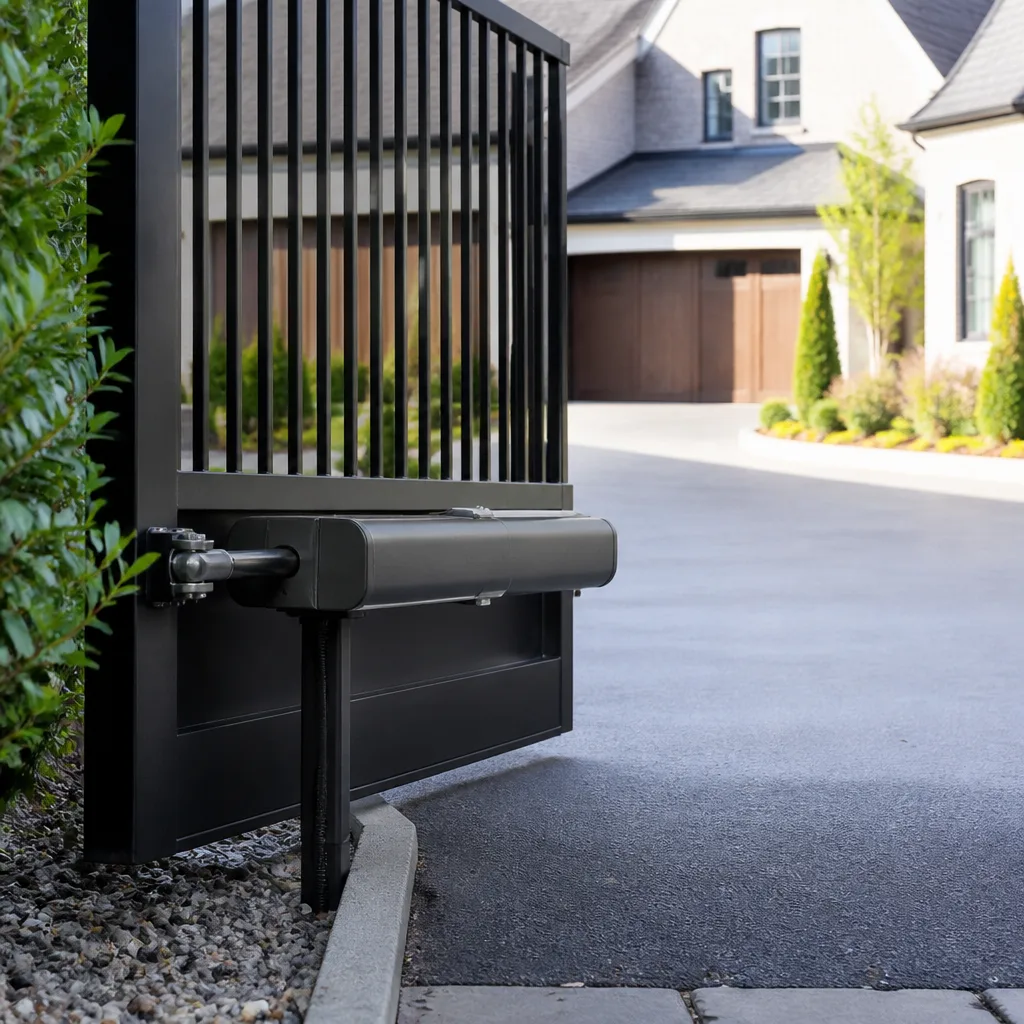
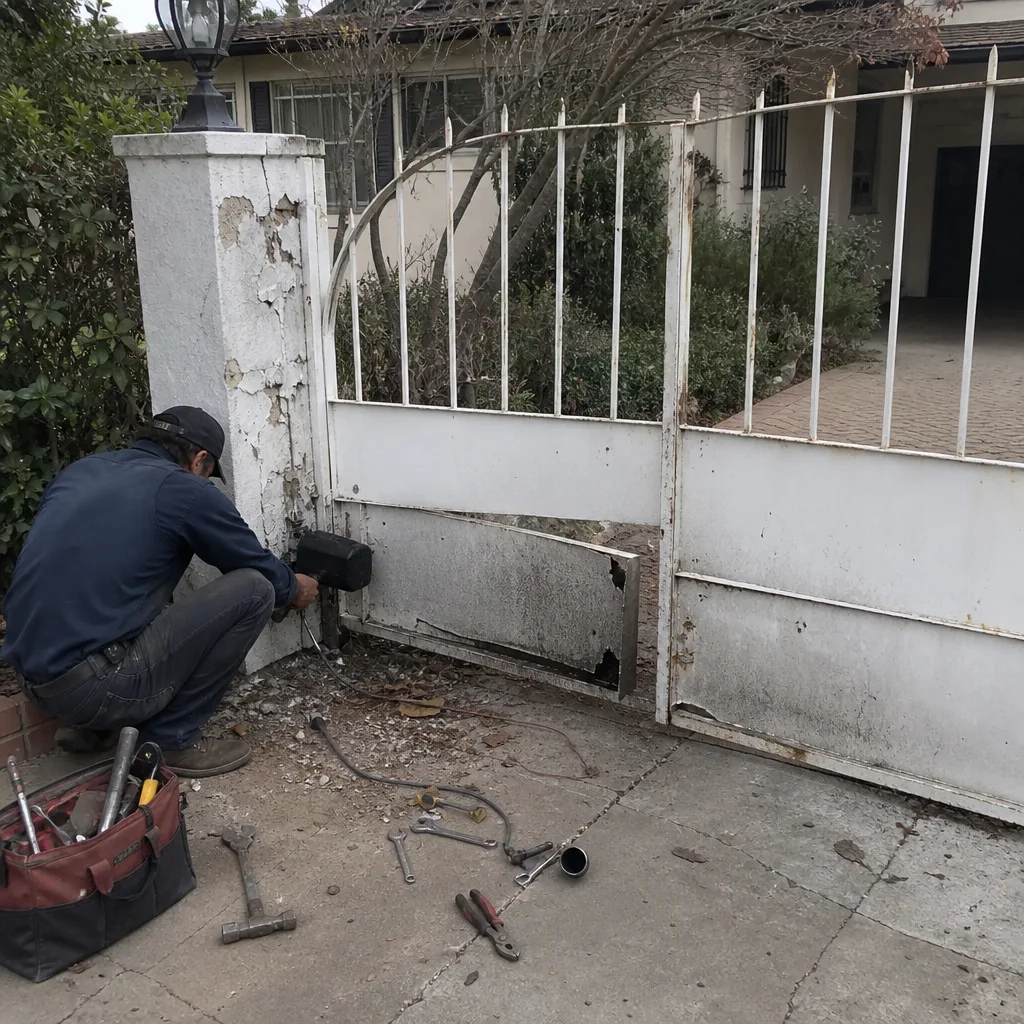 Before
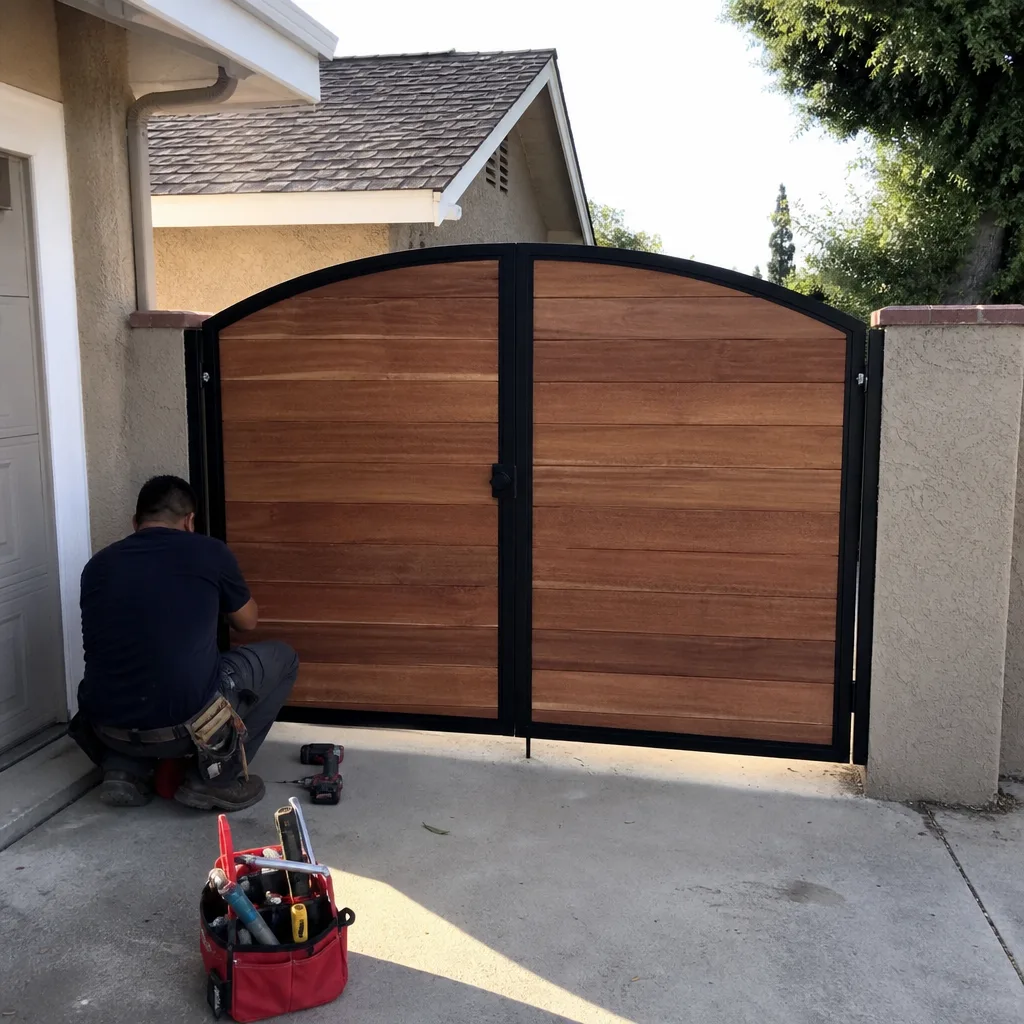 After
After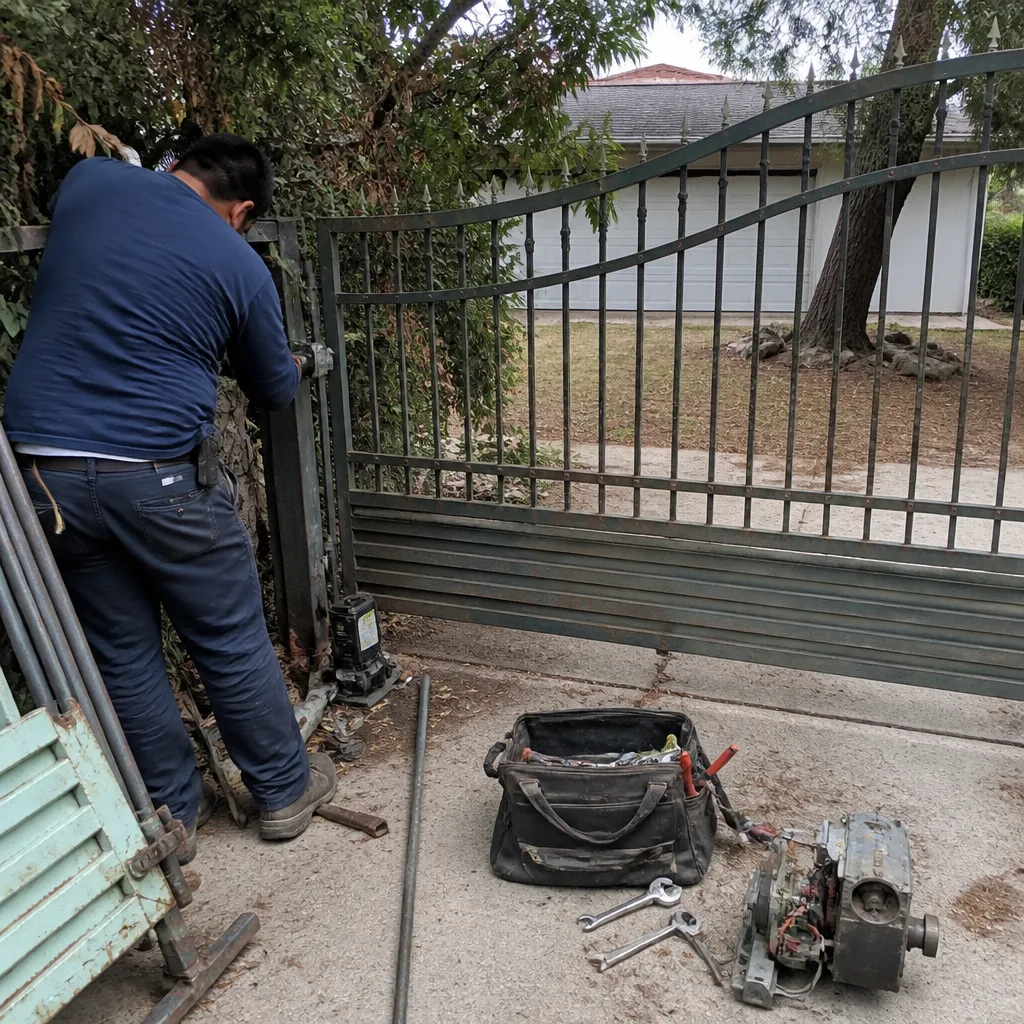 Before
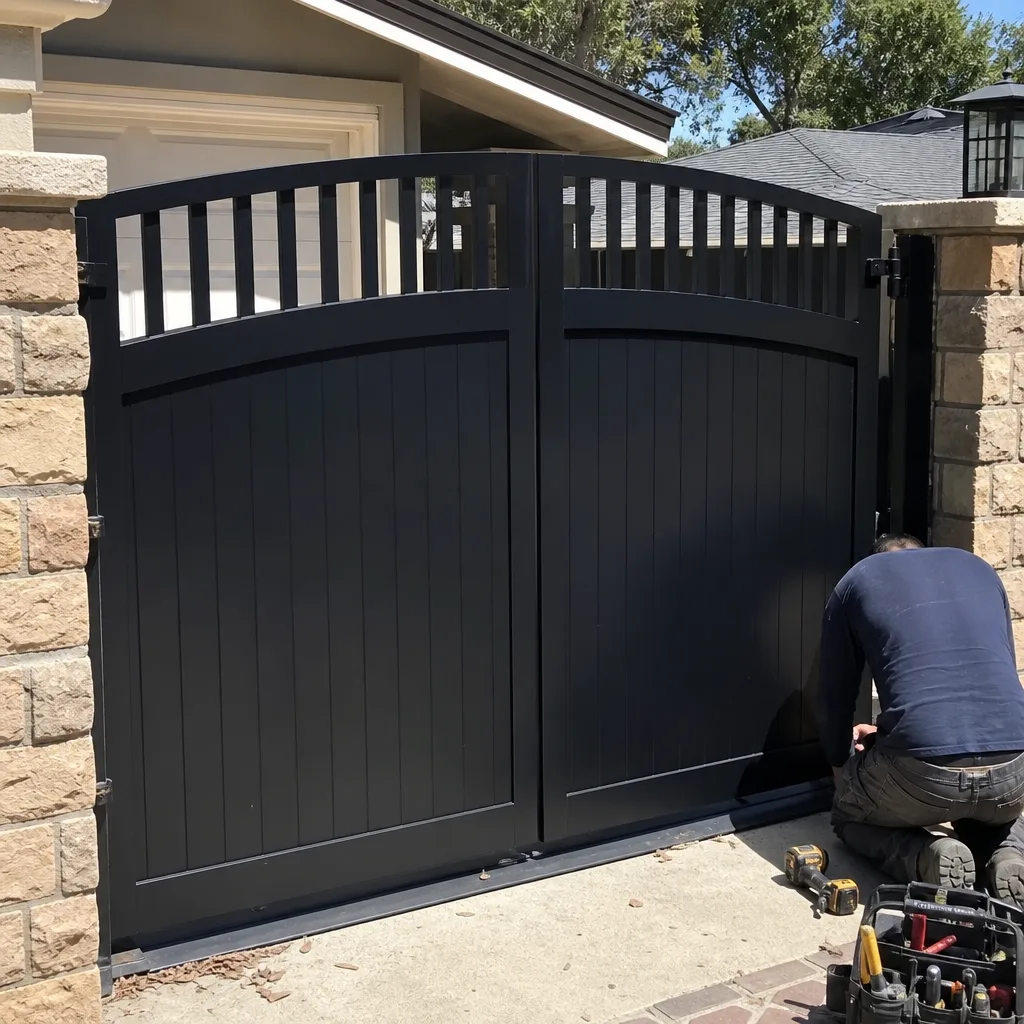 After
After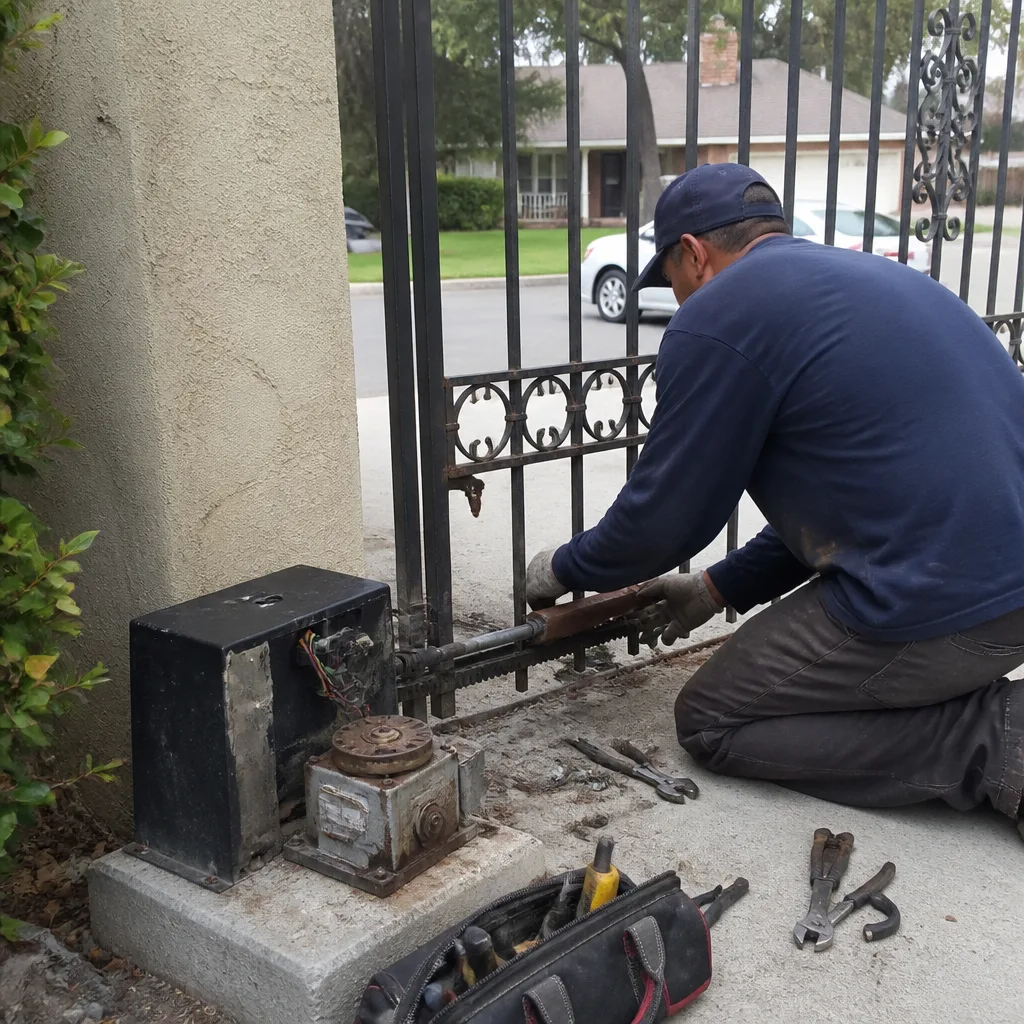 Before
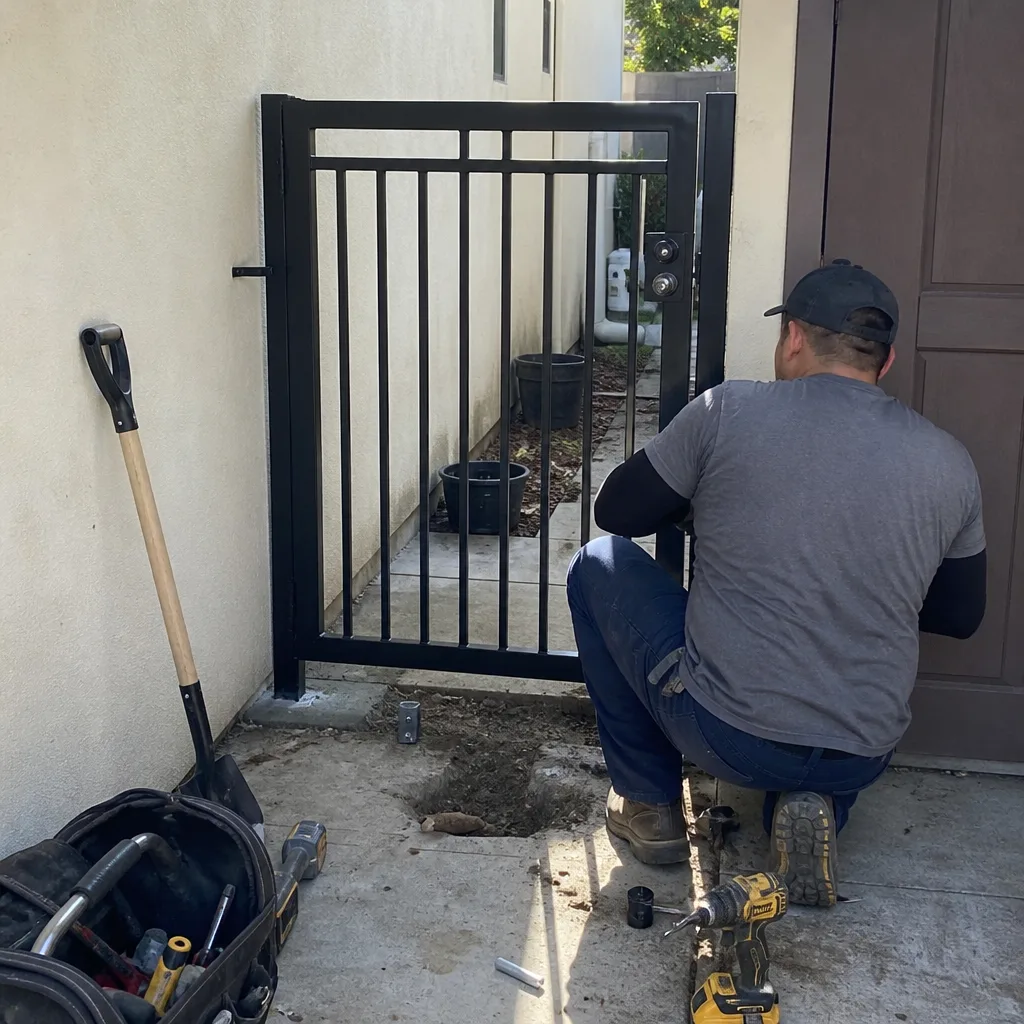 After
AfterGate Repair Maintenance Checklist for Arcadia Homeowners
Here’s the thing most Arcadia homeowners don’t realize until a gate motor burns out in August: the single most skipped maintenance item on every gate Hal inspects isn’t lubrication or hinge alignment. It’s the ground clearance check, and that one overlooked measurement quietly predicts about 60% of the motor failures we get called out to fix. A gate that dragged through wet grass all winter and baked through a Santa Ana summer doesn’t fail overnight. It fails slowly, and the signs were there months before the motor gave up. This guide walks you through exactly what to check, when to check it, and what actually matters for a gate living in Arcadia’s specific climate rather than a generic checklist written for somewhere that gets rain. For more guides & resources, see our blog.
Quick Answer
A proper gate maintenance checklist for Arcadia homeowners covers three intervals: monthly visual checks (hinges, ground clearance, opener response), quarterly mechanical checks (lubrication with the right product, chain or belt tension, mounting hardware torque), and annual deep inspections (post integrity, gate leaf alignment, electrical connections, safety sensor calibration). The goal is to catch wear in the hinge post and ground clearance before it transfers stress to the motor, because in Arcadia’s dry summers, a motor fighting a sagging gate burns out far faster than one pulling a balanced leaf.
Table of Contents
- Why Arcadia’s Climate Demands a Different Checklist
- Monthly Visual Checks That Take 10 Minutes
- Quarterly Mechanical Checks for Long Gate Life
- Annual Deep Inspection: The Once-a-Year Work
- Ground Clearance: The Measurement That Predicts Motor Failure
- Irrigation Overspray: The Rust Problem Nobody Talks About
- What to Lubricate, What to Leave Alone, and Why WD-40 Is Not Your Friend
- What You Can Safely Do Yourself vs. When to Call Hal
- Common Mistakes to Avoid
- When to Call a Professional
- Frequently Asked Questions
- The Bottom Line
Why Arcadia’s Climate Demands a Different Checklist
Arcadia isn’t a generic suburban environment. It sits in a specific microclimate zone where the San Gabriel Valley heat combines with the foothill wind patterns to create conditions that punish gate hardware in predictable ways. If you pull a maintenance checklist off a national website, it will tell you to watch for rust from rain and snow. That’s not our problem here. Our problem is dry heat that bakes grease out of bearings, Santa Ana winds that turn a slightly loose gate into a slamming one, and irrigation systems running chlorinated water onto metal posts twice a week all summer.
Here’s what we see in Arcadia that a generic checklist misses entirely. The summer heat in this valley regularly pushes past 95 degrees for weeks at a stretch. Gate motors mounted in direct sun on a south-facing wall can hit 140 degrees internally. That heat thins the grease in hinge bearings and in the motor’s gearbox. The grease doesn’t vanish; it migrates. It drips down, collects dirt, and turns into a paste that actually increases friction. By September, a gate that swung freely in May is dragging against its own bearings, and the motor is drawing more current to compensate. More current means more heat. More heat means a shorter motor life. The cycle compounds.
Santa Ana winds add a second stressor. When those winds push through Arcadia in the fall, a gate leaf catches wind like a sail. If the hinges have even a quarter inch of play, the wind turns that play into a hammering motion. Every gust slams the gate against its posts and its latch. We’ve replaced hinge pins that were worn half through after one bad Santa Ana season, and the homeowner never heard a thing because the noise was buried in the wind itself. A checklist that doesn’t account for wind load is a checklist that misses the most destructive seasonal event we have.
The third Arcadia-specific factor is irrigation. Arcadia homeowners love their landscaping, and that landscaping runs on sprinklers and drip lines. The overspray from a sprinkler head aimed slightly off hits a steel gate post on a timer, every single morning before dawn in the summer. Chlorinated water. Metal post. Repeated wet-dry cycles. That is a rust factory, and you won’t see it because the rust starts at the base where the post enters the concrete or the soil. By the time you see brown streaks below the hinge plate, the post wall has thinned significantly. We cover this in depth in the irrigation overspray section below because it’s the most common preventable failure we see in Arcadia specifically.
For a full picture of what Gate Repair in Arcadia actually involves, start there. But the short version is this: a maintenance plan built for Arcadia means checking for heat-stressed lubrication in summer, wind-loosened hardware in fall, and irrigation-driven rust year-round.
Monthly Visual Checks That Take 10 Minutes
These are the checks you can do while walking to the mailbox or coming back from the car. No tools required except your eyes and maybe a flashlight. Do them on the first weekend of the month. Write the date down. A log matters because gate wear is gradual, and a written record is the only way to know if something changed in the last thirty days or the last three hundred.
- Ground clearance measurement. Walk the gate through its full swing while watching the bottom edge. It should never touch the ground at any point in the arc. If the gap narrows at the latch end while wide at the hinge end, the gate is sagging. Measure the gap at both ends with a tape measure and write down the numbers. If the latch-end clearance drops by more than a quarter inch from last month, the hinge post is moving.
- Hinge hardware visual check. Look at every hinge pin, hinge plate, and the screws or bolts holding them. You’re looking for any gap between the plate and the post, any rust staining, any bolt that looks like it has rotated slightly. A hinge that is loosening will show a faint arc of polished metal near the bolt head where the plate is working back and forth.
- Opener response test. Press the remote or keypad and count the time from button press to the gate starting to move. In Arcadia’s heat, a Healthy gate motor responds in under two seconds. If there’s a pause, a click, a double-start, or a humming sound before movement, write it down. Intermittent start delays are the earliest symptom of a failing capacitor, which is the most common heat-related opener failure we replace in this valley.
- Safety sensor check. With the gate opening, walk into the sensor path. The gate should stop and reverse immediately. This is not optional. A gate that doesn’t reverse is a serious injury risk to children and pets, and in Arcadia, every automatic gate opener sold since 2016 is required by UL 325 to have monitored entrapment protection. If your gate fails this test, stop using the automatic function and call someone.
- Listen while the gate runs. A properly maintained gate is nearly silent except for the motor hum and the sound of wheels on the track if it’s a slide gate. If you hear grinding, squealing, rattling, or a rhythmic thump, that noise is telling you something specific. Grinding is metal-on-metal contact from dry bearings. A rhythmic thump is a bent wheel or a warped leaf. Rattling is loose hardware. None of these go away on their own.
That’s it. Ten minutes. Most homeowners skip this because it feels too simple to matter. It matters. These five checks catch about 80% of the failures we see on service calls before they become failures. The ones they don’t catch are what the quarterly checks are for.
Quarterly Mechanical Checks for Long Gate Life
Quarterly checks go a step deeper. These involve a wrench, a rag, the right lubricant, and about an hour. If you’re not comfortable with any of these steps, call someone who is. The checks are listed in order of importance, not in order of convenience.
- Torque check on every bolt you can see. Take a socket set or a wrench and check every bolt on the gate frame, the hinge plates, the opener mounting bracket, the track, and the post caps. Don’t crank them; just verify they’re snug. In Arcadia, thermal expansion and contraction from our hot days and cool nights works hardware loose faster than in coastal climates. A bolt that is slightly loose in June is fully loose by October. If you find any bolt that won’t hold torque, the hole is wallowed out and needs a larger fastener or a heli-coil. That’s a repair, not a maintenance item.
- Lubricate the right parts with the right product. Hinge pins, roller bearings, and the opener’s drive chain get a light coat of white lithium grease or a dedicated gate lubricant. Do not use WD-40. WD-40 is a solvent, not a lubricant. It will strip the existing grease out of the bearing and leave the metal surface dry, which accelerates wear. See the full lubrication guide below for specific product recommendations and what happens when you use the wrong one.
- Chain or belt tension check. On slide gates that use a chain drive, push on the chain with moderate finger pressure. It should deflect between half an inch and an inch. More than that means the tension has loosened, which causes jerky starts and accelerated sprocket wear. Less than that means the chain is too tight, which stresses the motor bearings. Adjust tension at the take-up bolt, not by moving the motor. If you’re not sure how tight is correct, look up the spec for your specific opener model or call us.
- Track inspection for slide gates. If you have a sliding gate, get down and look at the track and the support wheels. Arcadia’s dry dust mixes with whatever is in the air and builds up on the track surface as a fine abrasive paste. Wipe the track clean, inspect the wheels for flat spots or wobble, and check that the gate leaf is riding squarely on all wheels. A wheel that isn’t touching the track is carrying no load, which means the remaining wheels are overloaded.
- Fence and post inspection behind the gate. When the gate is open, look at the area behind the leaf that’s hidden when closed. Check for rust at the base of hinge posts, cracks in weld joints, signs of water pooling, and any vegetation that’s grown close enough to touch the gate. In Arcadia’s growing season, a vine or a shrub can go from “not touching” to “wrapped around the opener arm” in about six weeks.
If you do these quarterly checks consistently, the annual deep inspection becomes a formality rather than a rescue mission. If you skip them, the annual check is where you discover how much damage accumulated.
Annual Deep Inspection: The Once-a-Year Work
Once a year, set aside an afternoon and do the deep work. This is the inspection that finds what the monthly and quarterly checks can’t see, because it requires removing panels, opening the opener housing, and examining what’s hidden. If you’d rather have an experienced set of eyes on this, Gatewood Fence & Gate home service area includes all of Arcadia and we’re happy to do this inspection for you.
- Open the opener housing. Disconnect power first. Remove the cover and inspect the internal wiring, the capacitor, the gearbox, and the limit switches. Look for signs of heat: discolored wire insulation, a capacitor that’s bulging at one end, grease that has turned dark or crusty. In Arcadia, openers mounted on south-facing walls take extreme thermal stress all summer. A capacitor that’s showing its age is a ten-dollar part that will strand you at the worst moment if it fails.
- Inspect weld joints with a flashlight. Look at every weld on the gate frame. In Arcadia’s dry climate, we don’t get the widespread rust that coastal gates show, but we do get fatigue cracks, especially at the corners of the gate frame and where the top rail meets the stiles. A fatigue crack starts as a hairline that you can only see in raking light. Once it’s visible, the joint has already lost structural strength. If you find a crack, stop using the gate until it’s repaired. A cracked weld on a heavy gate is a failure waiting for the next wind event.
- Check the post-to-concrete interface. For hinge posts set in concrete, look at the area where the post enters the concrete. Any gap, any cracking in the concrete around the post, any visible rust at the base means water has been getting in. In Arcadia, this water is usually irrigation overspray rather than rain. The fix depends on how far the corrosion has gone, which is why this is an inspection item rather than a DIY repair.
- Calibrate the limit switches and safety edges. Set the open and close limits so the gate stops in the correct positions without slamming into the stops. Test every safety edge and photoelectric sensor. A gate that over-travels at close puts pressure on the latch and the frame, and in Arcadia’s wind, that pressure becomes impact force.
- Review the ground clearance history. Pull out the monthly log. Look at the trend line for latch-end clearance. If it has dropped more than half an inch over the year, the hinge post is moving or the gate frame is deforming. Measure the post with a level. You want to know whether the post itself is leaning or the gate frame has sagged, because the fixes are different and only one of them involves replacing the leaf.
- Electrical supply and grounding check. Verify that the circuit supplying the opener is GFCI-protected if required by current code, that the grounding wire is intact, and that any flexible conduit or exposed wiring is not cracked or chewed. Arcadia has a healthy population of squirrels and roof rats, and both love to chew on the insulation of low-voltage and line-voltage wiring.
Ground Clearance: The Measurement That Predicts Motor Failure
Let’s talk about why this one measurement matters so much. A gate that starts dragging on the ground at the latch end is the most common root cause of motor burnout in Arcadia. But the sequence doesn’t start with the motor. It starts with the hinge post. The post takes the weight of the gate leaf. Over time, that post leans, just a fraction of a degree per year. As it leans, the latch end of the gate drops. The clearance between the bottom rail and the ground shrinks. Eventually, the gate touches the ground at one point in its swing. It might be a tuft of grass at first, or a slight scrape on the driveway.
Here’s the mechanical reality: the motor is sized for the weight of the gate leaf and the friction of the hinges and track. Once the gate touches the ground, the motor is now pushing against the ground friction too. That friction multiplies. Every time the gate scrapes, the motor draws more current. More current produces more heat in the windings. Heat breaks down the insulation on the motor windings. The motor doesn’t fail the day the gate starts scraping. It fails months later, on the hottest day of July, when the ambient temperature is already stressing the motor and the added load pushes it over the edge.
How to measure it correctly:
- Close the gate fully. Measure the distance from the bottom of the gate frame to the ground at the hinge end. Write it down.
- Measure the same distance at the latch end. Write it down.
- Open the gate fully. Measure both again.
- Compare the four numbers. A healthy gate shows the same clearance at both ends, open and closed. A difference of more than half an inch between hinge and latch end means sag or post lean.
- If the latch-end clearance is less than two inches, start paying monthly attention. If it’s less than one inch, call someone before the gate touches ground.
We’ve said it before and we’ll keep saying it: a gate sags in the hinge post, not in the middle, and that is where we start. Fix the panel without the post and you’ll fix it twice. For swing gates specifically, Gate Installation in Arcadia gives you the full picture of what proper post setting looks like, because if a post wasn’t set deep enough or with the right concrete, no amount of adjustment will keep the gate level.
Irrigation Overspray: The Rust Problem Nobody Talks About
Arcadia is a landscaping town. We have mature trees, lush lawns, and sprinkler systems that run on timers year-round. That’s great for the property values and terrible for gate posts. Here’s the mechanism: a sprinkler head near the gate sprays a fine mist. Some of that mist lands on the steel post. Not a drenching, just a light coat of water, maybe ten seconds twice a day. The water evaporates quickly in our dry air. The chloramine and the mineral content stay behind. Then the cycle repeats. Day after day, month after month.
The rust this creates doesn’t look like the rust you see on a car in a snowy state. It’s a dark, rough, flaky corrosion that starts at the base of the post where the metal meets the concrete or the soil. It grows upward slowly. By the time you notice it, the post wall at the base has lost material. The post is still standing because the rust hasn’t gone all the way through, but the structural margin is gone.
How to spot it early:
- Look for a dark ring or discoloration at the base of the post where it meets concrete. This is the first visible sign, often mistaken for dirt.
- Check for bubbling paint or powder coating near the bottom six inches of the post. Rust under the coating pushes the coating outward.
- Look at the ground around the post. If there’s a persistent damp spot or the soil is darker than the surrounding area, irrigation water is pooling there.
- Feel the post base after the sprinklers run. If it’s wet, adjust the sprinkler head or add a deflector.
- Check the hinge plates. If they’re rusting faster than the rest of the gate, the water is being thrown upward by the impact of sprinkler spray.
The fix is simple when caught early: redirect the sprinkler head, add a shield or deflector, clean the surface, treat the rust, and repaint. The fix when caught late is a new post, which means removing the gate leaf, digging out the old post, setting a new one in fresh concrete, and rehanging everything. That’s a full-day job at best, and it’s why irrigation overspray is the most expensive maintenance item that costs almost nothing to prevent.
What to Lubricate, What to Leave Alone, and Why WD-40 Is Not Your Friend
Let’s talk about lubrication because it’s the step most people do wrong. The wrong lubricant is worse than no lubricant, and the most common wrong lubricant in Arcadia garages is WD-40. WD-40 is a water displacer and a penetrating solvent. It’s not a lubricant. Spraying it on a gate hinge feels like it’s working because the hinge moves easier for a day. What’s actually happening: the WD-40 is dissolving the existing grease and washing it out of the bearing surface. Then the WD-40 evaporates, which is its entire purpose. You’re left with dry metal on dry metal. The hinge accelerates its wear. If you’ve been spraying WD-40 on your gate hardware for years, stop today and get the right product.
What to use instead:
- White lithium grease for hinge pins, roller bearings, and slide gate wheels. It’s thick enough to stay put, it doesn’t attract as much dust as heavier greases, and it handles the heat of an Arcadia summer without liquifying.
- Silicone spray lubricant for the gate’s edge sensors, keypad buttons, and any plastic or rubber components. It doesn’t degrade plastic and it leaves a dry film.
- Dry graphite lubricant for lock cylinders and the keyway of the gate’s mechanical lock. Never use oil in a lock cylinder in Arcadia, because airborne dust sticks to oil and turns the cylinder gummy.
- Dedicated gate and garage door lubricant from a brand like LiftMaster or 3M for the motor’s drive chain and the chain tensioner. These are formulated for the temperatures and the loads of gate opener operation.
What not to lubricate: never lubricate the safety edge rubber strip, never lubricate photoelectric sensor lenses, and never lubricate the electric motor itself. The motor’s internal bearings are sealed and the gearbox has its own lubricant. Adding oil to these areas does nothing but attract dirt and create a mess that eventually works its way into the wiring.
The lubrication schedule in Arcadia should account for the heat. Where a coastal homeowner might lubricate annually, our summers demand lubrication quarterly during the hot season and at the start of winter. The heat drives the grease out of the bearings faster. If your gate sits in full sun all afternoon, check the hinge bearing lubrication monthly from June through September.
What You Can Safely Do Yourself vs. When to Call Hal
Most of the visual and measurement checks in this guide are safe for any homeowner. The quarterly torque check, the lubrication, the listening tests, the clearance measurements, and the sprinkler checks are all things you can do with basic tools and reasonable caution. But there are three specific checks that deserve a professional, because they involve risks that aren’t obvious until something goes wrong. Before starting any work, review Gate Repair Permits, Codes & Inspections in CA: What You Need to Know.
First, any electrical work inside the opener housing. Gate motors in Arcadia run on 120-volt AC power supplied through a cord or conduit. The motor’s capacitor can hold a charge even after the power is disconnected, and a charged capacitor can hurt you. Testing the capacitor, checking the motor windings, and verifying the grounding require a multimeter and the knowledge to use it safely. If you open the housing and see discolored wires or a bulging capacitor, close it back up and call us.
Second, any weld inspection or weld repair. You can inspect welds visually, but you can’t assess their structural integrity by eye. A weld that looks fine can be hollow inside or contaminated with porosity. If you find a crack in a weld, the repair involves grinding out the defective weld material and re-welding with the proper rod and settings for the gate’s steel. This is not a job for a homeowner with a cheap flux-core welder from the hardware store. A bad weld on a gate is more dangerous than no weld, because it looks fixed while holding almost nothing. For gate motor and opener questions beyond the mechanical checks, Gate Motor & Opener in Arcadia covers what we actually do when we open up a failed opener.
Third, any hinge post replacement or major realignment. The hinge post holds the weight of the gate. Removing it and setting a new one involves digging, concrete work, precise leveling in two planes, and rehanging the leaf so it swings true. If the post is anchored incorrectly, the gate will never operate correctly and every other maintenance item on this list becomes a bandage on a broken bone.
For everything else, the monthly and quarterly checks are straightforward and within reach. The point of this guide isn’t to make you a gate technician. It’s to give you the information to catch problems early, do the simple maintenance correctly, and know the exact moment to pick up the phone instead of pushing further.
Common Mistakes to Avoid
- Using WD-40 on everything that moves. We covered this above, but it bears repeating because it’s the most common mistake in Arcadia. WD-40 strips grease and leaves metal dry. Use white lithium grease or a dedicated gate lubricant instead.
- Ignoring a gate that’s getting slightly harder to open. When a gate starts feeling heavier, the cause is almost never the motor. It’s a dry bearing, a rusty hinge, a dragging point, or a leaning post. The longer you wait, the more expensive the repair gets.
- Testing the safety sensors once and never again. Entrapment sensors are a critical safety feature, and they fail without warning. Test them monthly. A gate that doesn’t reverse on obstruction is an injury waiting for a child or a dog.
- Trimming vegetation only when it’s visibly touching the gate. By the time a shrub touches the gate, it’s already been depositing moisture and blocking airflow for weeks. In Arcadia’s climate, that trapped moisture against metal is a rust promoter. Keep at least six inches of clearance around every part of the gate.
- Assuming a squeak is just a squeak. A squeak is metal rubbing on metal. It’s telling you exactly where the friction is and what part is wearing. Lubricate the squeak immediately, then find out why it started in the first place.
- Checking the gate only when it’s already broken. Gates don’t fail suddenly. They fail gradually, and the signs are visible for months beforehand. A monthly ten-minute check costs nothing. A motor replacement in August costs hundreds.
- Painting over rust without treating it first. Rust continues growing under paint. You have to remove the rust, treat the surface, prime, and then paint. Skipping any step means the rust wins.
When to Call a Professional
Call a professional when you find a cracked weld, a leaning hinge post, an opener that hesitates or hums before starting, or a safety sensor that fails the monthly test. Call when the ground clearance at the latch end has dropped below one inch, or when the gate has started touching the ground at any point in its swing. These are not maintenance items. They are gate repair situations, and the longer you wait the more, we’ll be replacing the motor or the post instead of repairing the underlying problem. Gatewood Fence & Gate offers free estimates in Arcadia. Call (626) 628-9548 and a live person answers, day or night.
Frequently Asked Questions
Lubricate hinge pins, roller bearings, and the drive chain every three months during the hot season and at the start of winter. Arcadia’s summer heat thins grease and drives it out of bearing surfaces faster than coastal climates, so quarterly lubrication is the minimum for gates in full sun. Give us a call at (626) 628-9548 if you want a specific lubrication schedule for your gate’s brand and location.
A gate motor that hums but doesn’t move is almost always either a failed start capacitor or a gate leaf that’s binding against the ground or the track. In Arcadia, the binding cause is most common in summer when dry soil settlement and heat expansion change the gate’s geometry. The fix starts with finding the binding point, not replacing the motor. Call (626) 628-9548 for a diagnosis before spending money on parts you may not need.
Gate repair in Arcadia typically runs from $150 for a minor adjustment or tightening to $600 or more for a motor replacement or hinge post reset. Weld repairs, electrical work, and post replacement are each in the $250 to $800 range depending on scope. Every Gatewood Fence & Gate job carries an upfront price agreed before work starts, plus a 90-Day Done Right Promise in writing. Call (626) 628-9548 for an exact quote, and mention the $40 off any repair over $200.
Homeowners can safely handle monthly visual checks, quarterly lubrication, torque checks, ground clearance measurements, and vegetation trimming. The three tasks that need a professional are opening the opener housing to inspect electrical components, any weld inspection or repair, and hinge post replacement or realignment. Those involve electrical shock risk, structural welding skill, and concrete work respectively.
Automatic gate openers in Arcadia are governed by California state law and UL 325 safety standards, which require entrapment protection sensors and periodic testing. The city of Arcadia also enforces building codes for gate installation, particularly fence height limits and setback requirements. If you’re planning a new gate installation, Gate Installation in Arcadia covers the local requirements in detail.
The most common Arcadia-specific gate problem is post rust from irrigation overspray combined with motor stress from a sagging hinge post. The sprinklers rust the post from the base up, the post leans, the gate drags, and the motor burns out. The sequence is preventable with a monthly clearance check and a sprinkler head adjustment. It’s the first thing Hal checks on every service call in this area.
The Bottom Line
A gate in Arcadia lives in a specific environment: summer heat that bakes the grease out of bearings, Santa Ana winds that hammer loose hardware, and sprinkler overspray that rusts posts from the base up. The maintenance schedule that works here is monthly visual checks, quarterly mechanical care, and one annual deep inspection. Measure your ground clearance every month and write it down. Lubricate with white lithium grease, not WD-40. Test the safety sensors religiously. And when you find something that needs a welder or a multimeter, call someone whose name is on the invoice. The name is on the shop, and the shop is down the road. That is the oldest accountability there is.
Written by Hal Gatewood, Owner at Gatewood Fence & Gate, serving Arcadia since 2001.