
Last updated August 26, 2026
Free on-site gate assessment - hinges, posts, and your LiftMaster or Nice gate operator checked before anything is quoted
The assessment is free and the quote is the invoice.

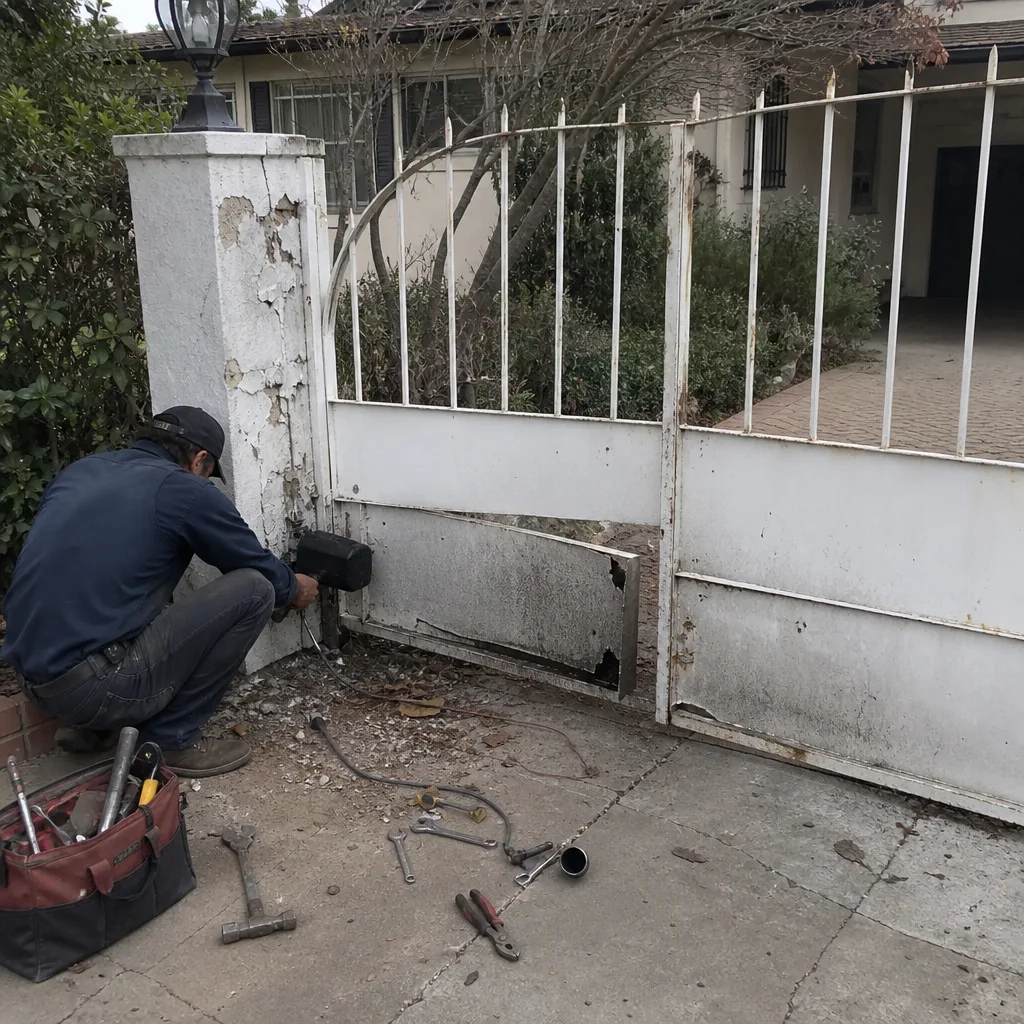 Before
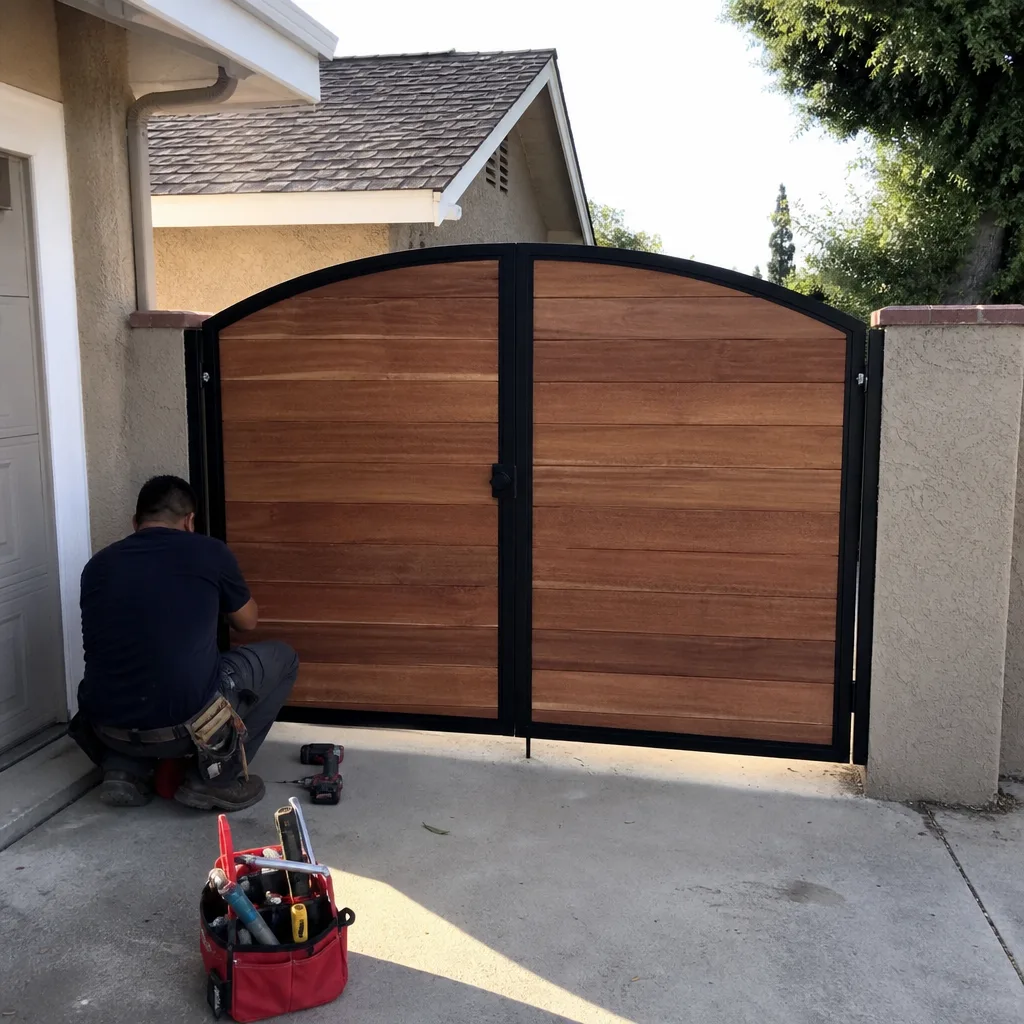 After
After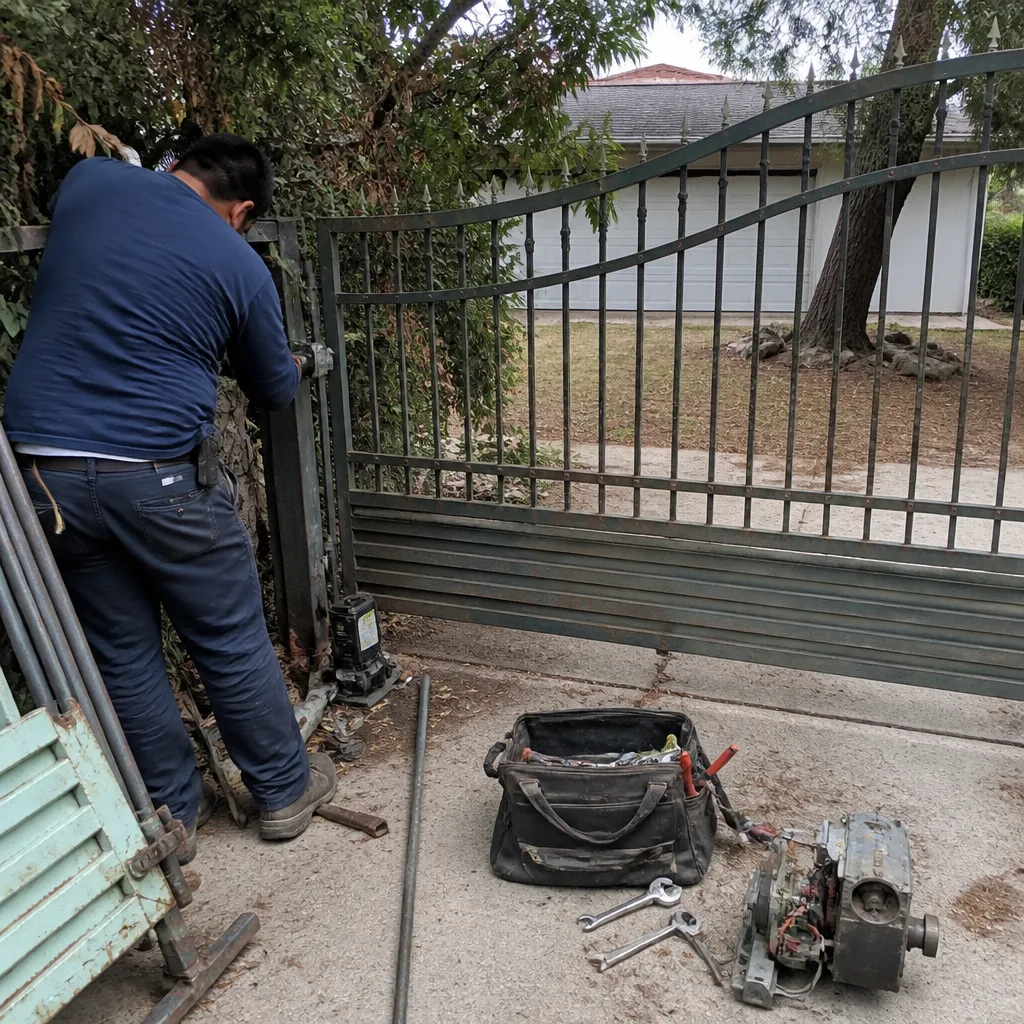 Before
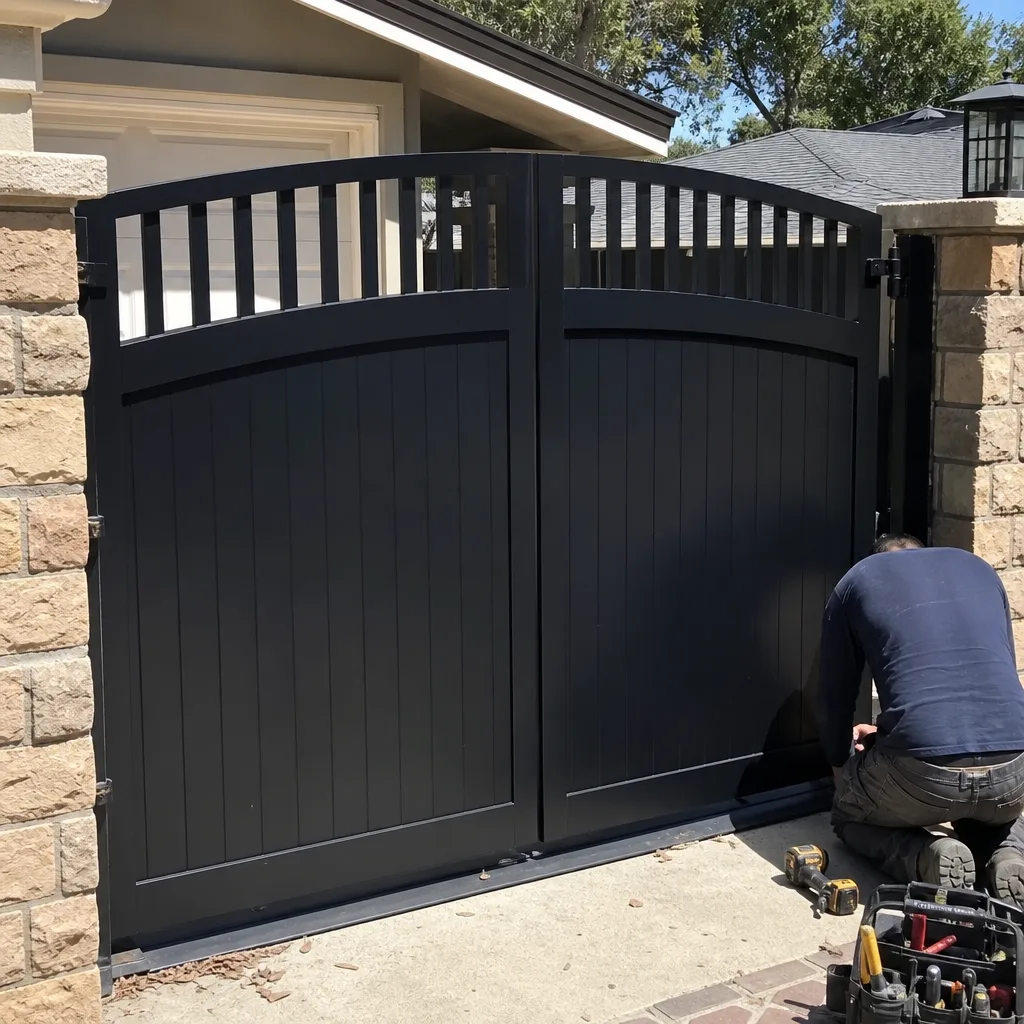 After
After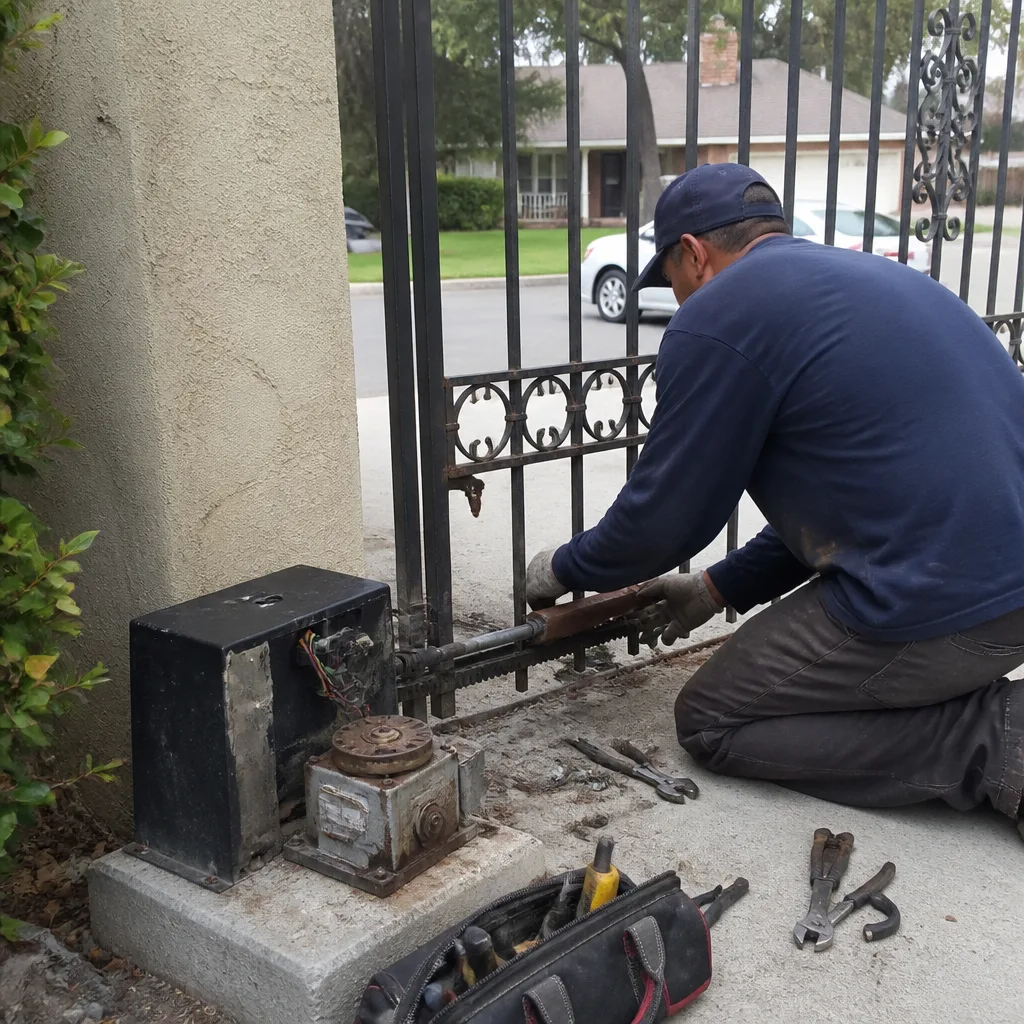 Before
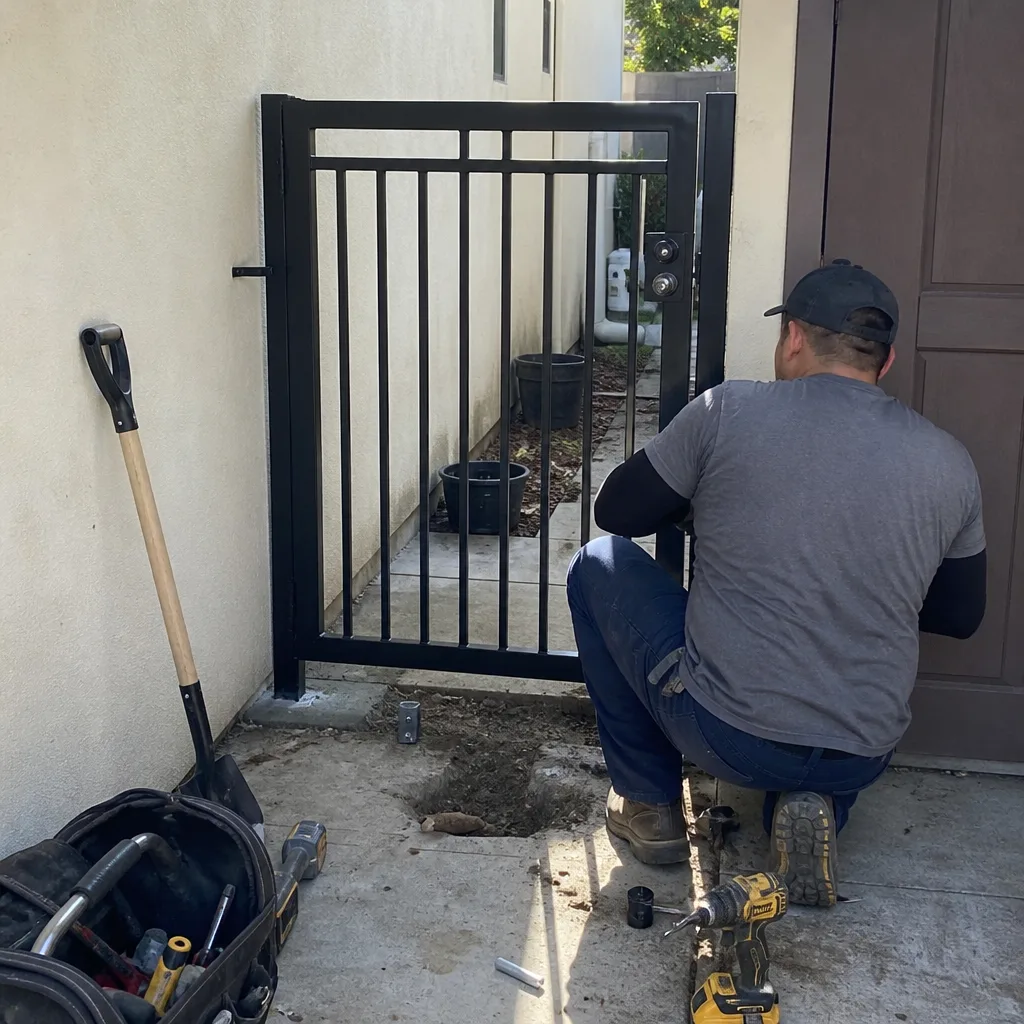 After
AfterSeasonal Gate Repair Care for Arcadia: Year-Round Homeowner’s Guide
Here’s something that surprises most Arcadia homeowners: the busiest stretch of our year isn’t after a big rainstorm. It’s the two weeks after Santa Ana winds rip through, when vibration-loosened bolts and grit-packed tracks finally push tired gate motors past their limit. Arcadia doesn’t get ice or snow, so people assume their gates are low-maintenance year-round. That assumption is exactly what keeps gate repair shops busy. The truth is, our local gate damage cycle runs on three distinct seasons: Santa Ana wind season, peak irrigation months, and the January-through-March wet stretch. Each one creates its own failure pattern, and each one can be headed off with about ten minutes of attention at the right time. This guide walks through what to check, when to check it, and when to pick up the phone instead of reaching for a wrench.
Quick Answer
Seasonal gate care in Arcadia means preparing for Santa Ana winds in September and October, keeping irrigation overspray off gate hardware from May through August, and checking post-base drainage during the winter wet stretch. A 10-minute visual inspection after any wind event over 40 mph catches most problems before they become DIY vs professional repair decisions. The good news is that most of this costs nothing but time, and the fixes that do cost money are usually under $20 when caught early.
Table of Contents
- Why Arcadia’s Climate Is Harder on Gates Than It Looks
- The Arcadia Month-by-Month Gate Care Calendar
- Santa Ana Prep: What to Check in September Before Wind Season
- The 10-Minute Post-Wind Inspection (After Any Event Over 40 MPH)
- Wet-Season Drainage: The $15 Fix That Prevents a $400 Repair
- Summer Irrigation Overlap: Keeping Sprinkler Water Off Gate Hardware
- What You Can Safely Check Yourself (and What You Shouldn’t Touch)
- Common Mistakes to Avoid
- When to Call a Professional
- Frequently Asked Questions
- The Bottom Line
Why Arcadia’s Climate Is Harder on Gates Than It Looks
Arcadia sits in a strange spot when it comes to gate wear. We’re far enough inland that summer days push into the 90s, but close enough to the San Gabriel Mountains that winter nights drop into the low 40s. That daily temperature swing does something specific to metal: it expands and contracts gate panels, hinge bolts, and track brackets just enough to work fasteners loose over time. A gate that swings perfectly in June might drag slightly by December, not because anything broke, but because a half-dozen bolts backed out a quarter turn each.
Then there’s the wind. Santa Ana events regularly hit 40 to 60 mph in the foothill neighborhoods north of Foothill Boulevard, and gusts in the Upper Rancho area can be stronger still. Wind doesn’t just push against the gate panel. It sets up a vibration that travels through the entire frame, loosening whatever was already marginal. We’ve pulled into driveways in the Santa Anita Oaks neighborhood where the gate looked fine from the street, but the hinge post had been worked loose enough to shift a full half inch under load.
Dust matters here too. Santa Ana winds carry fine grit from the foothills and the washes. That grit lands on gate tracks, chain drives, and hinge surfaces. Mixed with the lubricant that’s already there, it forms a grinding paste that accelerates wear on rollers and bearings. Homeowners who lubricate their gate tracks twice a year without wiping them down first are basically lapping the metal. In Arcadia, the dust is the problem, not the lack of lubrication.
Finally, irrigation overspray is a bigger deal than most people realize. Arcadia has a lot of mature landscaping. Roses, citrus, camellias. Sprinklers run year-round in some yards. When a sprinkler head throws water onto a steel post base or into a motor housing once or twice a day, it creates a rust cycle that never gets a chance to dry out. Powder-coated steel holds up for years. Bare steel at a scratched weld or a bolt hole does not.
The Arcadia Month-by-Month Gate Care Calendar
None of this requires a free weekend. Most tasks take ten minutes or less. The point is doing them in the right month, when they actually matter for Arcadia’s specific weather patterns.
January: Wet-Season Drainage Check
Stand at each gate post after a rain and look for puddling. Water should sheet away from the post base, not collect around it. If it puddles, scoop out the soil so it slopes away. While you’re there, wipe down the gate track with a dry rag and spray a light coat of lithium grease on the rollers. January is also the month to look for rust starting at weld points or scratches. A $7 can of rust-inhibiting spray paint now prevents a weld repair later.
February: Bolt-Tightening Pass
Take a socket set to every visible bolt on the gate frame, hinge brackets, and motor mount. Don’t crank them down hard. Snug them, then give each one an eighth turn more. Over-tightening strips threads or deforms the bracket. While you’re at it, check the gate’s manual release. Pull it once and make sure it operates smoothly. You want to know it works before you actually need it.
March: Track and Roller Cleaning
With the rains ending, this is when a winter’s worth of silt has settled into every low spot on the track. Wipe it out completely. Then inspect each roller for flat spots or cracks. A damaged roller grinds against the track and wears both parts. Most rollers cost under $15 and take under an hour to swap if you’re comfortable with basic tools. If you’re not, this is a quick service call.
April: Motor and Opener Function Test
Run the gate through three full open-close cycles while you watch and listen. It should move smoothly, without jerking or hesitation. Listen for grinding from the motor housing. Check that the safety reverse actually stops and reverses the gate when it meets resistance. Arcadia has a lot of households with grandchildren visiting. That safety feature is not optional.
May: Irrigation Overspray Adjustment
Turn on each sprinkler zone and watch what the water actually hits. Rotor heads drift out of adjustment over the winter. If any spray reaches a post base, hinge, or motor housing, adjust the head or install a small shield. This one habit prevents more rust-related repairs in Arcadia than anything else we can recommend.
June: Thermal Expansion Check
On the first 90-degree day, open the gate and watch the leading edge as it passes the latch post. Heat makes metal expand. A gate that cleared by half an inch in March might almost touch in June. If clearance is tight, this is the month to adjust the latch or trim the panel, not October when the wind is pushing against it.
July: Hinge Lubrication and Post Inspection
Spray each hinge with a penetrating lubricant and work the gate back and forth a few times. While the gate moves, watch the posts. They should not flex. If a post shifts even slightly, the lag bolts have loosened or the concrete collar has cracked. Catching a loose post in July gives you three months to fix it before wind season.
August: Chain or Belt Drive Service
If your opener uses a chain, check the tension. It should deflect no more than a half inch when pressed with a finger. Too loose and it jumps the sprocket. Too tight and it eats the bearing. Belt drives need the opposite: check for cracking or glazing on the belt surface. August is also a good month to check the battery backup on your opener, if it has one. Santa Ana wind events often bring power outages with them.
September: Full Santa Ana Prep
This is the most important month of the year for Arcadia gates. Walk through the complete checklist in the next section. Block off an hour. The goal is to find every loose fastener, worn roller, and weak point before the first big wind event, not after.
October: Wind Season Monitoring
After any wind event over 30 mph, do the 10-minute inspection covered below. Even if you find nothing wrong, run the gate through a full cycle and listen. Wind damage often shows up over the following week as parts settle into their new, wrong positions.
November: Leaf and Debris Clearing
Arcadia’s street trees drop a lot of material in late fall. Sycamore and oak leaves get into gate tracks, clog drain holes in post caps, and pile up against the gate panel. Clear it all out. Debris against a gate panel traps moisture against the steel. Debris in the track causes the motor to work harder, which shortens its life noticeably.
December: End-of-Year Hardware Audit
Walk the gate with a checklist and note anything that’s marginal: a hinge with play, a roller that grinds, a post with surface rust. You don’t have to fix it all in December. But writing it down means you’ll remember in January, when the wet season starts and marginal turns into broken.
Santa Ana Prep: What to Check in September Before Wind Season
In our experience, half the service calls we get in October and November could have been prevented with thirty minutes of attention in September. The wind doesn’t break gates that are in good condition. It breaks gates that already had loose hardware, marginal parts, or structural weakness. Here’s the specific checklist we run on our own shop gate every September, and the same one we recommend to Arcadia homeowners.
- Tighten every visible fastener on the gate frame, hinge brackets, and motor mount. Use a torque sequence: snug them in order, then go around again. A bolt that’s already loose will be fully loose after two hours of 45 mph gusts.
- Check the hinge lags into the post. If a lag bolt turns without tightening, the wood or concrete has stripped. That’s a repair for a professional, because a stripped hinge mount is exactly what fails when the wind starts pushing.
- Inspect the gate catch and latch. A latch that’s sticky or loose gives the panel room to rattle. Rattle becomes vibration. Vibration becomes loose hardware. The catch should hold the panel firmly with no play.
- Clean every track of accumulated dust and grit from the dry summer. Then lubricate sparingly. A clean dry track is better than a lubricated gritty one.
- Test the opener’s manual release. If the power goes out during a wind event, you need to be able to open the gate by hand. A seized release mechanism means a call at the worst possible time.
- Trim any tree branches within eight feet of the gate path. A branch that touches the gate in calm weather becomes a battering ram when the wind picks up.
None of this requires special tools beyond a socket set and a can of lubricant. The skill is in knowing to do it before the first Santa Ana event, not after. The National Weather Service typically gives 48 to 72 hours of warning before a major wind event. If you haven’t done your September checks, that window is your backup.
The 10-Minute Post-Wind Inspection (After Any Event Over 40 MPH)
When the wind dies down, do this before you run the gate at all. A gate that’s been structurally damaged may move fine for a few cycles, then fail catastrophically. The inspection tells you whether you’re looking at a cosmetic problem or a structural one.
- Look at the posts first. Are they still plumb? Sight down the post from top to bottom. Any lean, any gap between the post and the ground, any fresh cracks in the concrete collar around the base. If the post moved, stop the inspection and call us. Don’t run the gate.
- Look at the gate panel where it meets the hinges. Wind loads concentrate at hinge points. Check for cracked welds, bent hinge plates, or bolts that have pulled loose from the post.
- Run your hand along the top rail and bottom rail of the panel. You’re feeling for a bend or kink. A panel that’s been flexed repeatedly will show distortion somewhere between the hinges and the latch.
- Check the track for debris and bent sections. A gust can pick up a branch and drop it in the track, or it can push the gate against the track hard enough to bend the rail. Open and close the gate slowly by hand if possible, feeling for resistance.
- Listen to the motor while running a full cycle. A motor that’s been fighting the wind for hours may have overheated, stripped a gear, or damaged the circuit board. Grinding, clicking, or that hot electrical smell mean stop using it and call.
- Check the safety edges and photo eyes. Blowing debris can knock sensors out of alignment. If the safety eye blinks or the edge doesn’t respond, that’s a safety problem, not a cosmetic one.
If you find post movement, cracked welds, or a bent panel, call Gate Repair in Arcadia rather than trying to fix it yourself. A gate under tension can move suddenly, and that’s a risk not worth taking for a few dollars in savings.
Wet-Season Drainage: The $15 Fix That Prevents a $400 Repair
Here’s a pattern we see every winter in Arcadia’s older neighborhoods. A steel gate post was set in concrete years ago. Over time, the soil around the post settled, creating a bowl that collects water. Every January rain leaves a puddle around the base. The water wicks up under the paint, rust starts at the buried section, and within two or three years the post rusts through at ground level. The gate starts sagging. By the time it’s visible from the street, the post needs to be cut out, a new one set, and the gate re-hung. That’s a $400 to $800 repair depending on the size of the gate.
The prevention costs about fifteen dollars and half an hour. Here’s the fix.
- After a rain, find any spot where water puddles within six inches of a post base.
- When the ground is dry enough to dig, scoop out the soil around the post to about four inches deep and twelve inches wide.
- Lay down a two-inch layer of crushed rock or pea gravel. This creates a drainage zone so water doesn’t sit against the steel.
- Slope the surrounding soil away from the post on all sides. A one-inch drop over two feet is enough.
- If the post base already shows rust, wire-brush the area, apply a rust converter, and coat it with cold galvanizing spray. A can runs about $10 at any Arcadia hardware store.
This is the kind of maintenance that doesn’t feel urgent in the moment, because the damage takes years to show. But when it shows, it shows all at once. Every winter we cut out posts in Arcadia that could have lasted another twenty years if water had never been allowed to pool around them.
Summer Irrigation Overlap: Keeping Sprinkler Water Off Gate Hardware
Arcadia landscapes are irrigated heavily from May through September. Most yards run sprinklers early in the morning, which means gate hardware gets wet every single day. It dries by noon, but the damage is cumulative. Here’s the specific problem: sprinkler water is not clean water. It carries dissolved minerals and whatever it picks up off the soil. When it evaporates, those minerals stay behind on the metal surface. Over a summer, that leaves a crust of residue that holds moisture against the steel or aluminum. On steel gates, that means rust at the post bases, hinge bolts, and any scratch in the coating. On aluminum gates, it means pitting and white corrosion deposits at the joints.
The good news is that fixing the overlap doesn’t require a full irrigation redesign. Here’s what actually works.
- Adjust the sprinkler heads. Most rotor heads have an adjustment screw that controls throw distance. If a spray arc passes over the gate path, shorten the throw by five feet. It costs nothing and takes two minutes per head.
- Install a simple spray shield. A six-inch strip of aluminum flashing, bent into an L-shape and staked between the sprinkler head and the gate hardware, blocks most overspray. This is not a pretty solution, but it’s effective and costs about $10.
- Change the watering window. If your controller runs zones at 6am, move the zones near the gate to run last or move the start time later. The goal is to give the water a chance to evaporate before the gate first operates for the day. This only matters if someone leaves the house every morning and runs the gate while it’s still wet.
- Rinse the gate hardware monthly with clean water. A garden hose with a gentle spray removes the mineral buildup before it becomes a crust. This is especially important on the gate track, where mineral deposits mix with lubricant to form a thick paste.
We’ve seen gate motors in Arcadia fail because a sprinkler head pointed directly at the control box for an entire summer. The housing was rated for outdoor use, but not for daily direct spray. A small adjustment to that one head would have saved a $350 motor replacement. Look for the obvious overlap first. It’s usually the only problem.
What You Can Safely Check Yourself (and What You Shouldn’t Touch)
Most of this guide covers inspections and light maintenance, which is work any careful homeowner can handle. But there’s a line, and you should know where it is. Gate hardware under tension is dangerous. The same is true for electrical components that carry line voltage. Here’s the dividing line we tell homeowners in Arcadia.
Safe to handle yourself: tightening visible bolts that are already snug, cleaning tracks, lubricating hinges, adjusting sprinkler heads, clearing leaves and debris, checking drainage patterns, tightening a latch that’s slightly loose, testing the manual release, and running the gate to observe its movement.
Leave to a professional: any work on the springs, cables, or tension rods that counterbalance a gate. These components are under hundreds of pounds of stored force. If a cable clamp or spring anchor lets go while you’re working on it, the result is a serious injury. The same applies to any electrical work inside the motor housing or control box. Capacitors hold a charge even after power is disconnected. Also leave alone: replacing hinge posts, repairing cracked welds, straightening a bent gate panel, and any repair where the gate must be lifted off its hinges. These jobs require tools, experience, and in some cases, lifting equipment that most homeowners don’t have.
If you’re ever unsure, call us. We’d rather spend five minutes on the phone answering a question than respond to an injury that could have been avoided. Hal has been fixing gates in Arcadia since 2001, and he’ll tell you the same thing: the line between a do-it-yourself job and a dangerous one is not about your skill level. It’s about what happens if something goes wrong.
Common Mistakes to Avoid
- Lubricating without cleaning first. In Arcadia’s dusty conditions, lubricant mixed with grit forms an abrasive paste that wears rollers and tracks faster than no lubricant at all. Wipe the surface clean, then apply lubricant sparingly.
- Checking the gate only when it starts acting up. By the time a gate drags, squeals, or sticks, the damage is already done. The seasonal checks in this guide are designed to catch problems before they become symptoms.
- Ignoring a slightly loose post. A post with an eighth inch of movement under load will have half an inch by the end of one Santa Ana season. The fix gets more expensive the longer you wait.
- Using WD-40 on gate hardware. It displaces water and cuts rust, but it’s too light for hinges and rollers. Use a proper lithium grease for rollers and a penetrating oil for hinges.
- Tightening bolts without checking what they’re mounted into. A stripped lag bolt in a wooden post won’t hold no matter how much torque you apply. If a bolt spins without tightening, the mounting point itself needs repair.
- Running the gate on a battery backup for weeks after a power outage without testing the baseline function. Batteries degrade with each deep discharge. Test the opener on line power after the outage ends, and replace the battery if it no longer holds a charge through the night.
- Painting over rust without treating it. The rust continues under the new paint until it breaks through again. Wire-brush, treat, prime, then paint. Arcadia’s dry air helps paints last, but only if the surface was prepared correctly.
When to Call a Professional
A hinge post that has shifted at the base is a structural problem. Don’t wait on it. The gate is getting heavier on that post every time it cycles, and the wind is working against it every season. A cracked weld at any hinge point is the same: it doesn’t heal, it propagates. A motor that’s been grinding, smoking, or overheating needs attention before it damages the control board too, and that’s a repair that triples in cost once the board goes. If the gate stops responding to the remote or keypad after a wind event, that could be anything from a blown capacitor to a damaged photo eye, and guessing while replacing parts gets expensive fast. We give homeowners in Arcadia a straight answer on what needs fixing and what doesn’t. Gate Motor & Opener in Arcadia service calls include the diagnosis, not just the repair. Call (626) 628-9548 and a live person answers. We’ll tell you over the phone whether it’s something you can handle yourself or something we should come look at. Estimates are free, and the price is agreed before any work starts.
Frequently Asked Questions
Yes. Arcadia’s damage cycle comes from Santa Ana winds, irrigation overspray, and winter rains, not freezing temperatures. The maintenance calendar in this guide maps directly to those three stressors. A gate that gets ten minutes of attention per month in the right season will outlast a gate that gets ignored until it breaks by years. For the full picture, see The Complete Guide to Gate Repair in Arcadia.
Twice a year is right for most Arcadia gates: once in March after the wet season ends, and once in September before wind season begins. The key is cleaning before lubricating. Wipe the track and hinge surfaces free of dust and grit, then apply lubricant sparingly. Over-lubrication attracts more dust and creates the grinding paste that causes premature wear.
For homeowners who’d rather have a professional handle it, a seasonal inspection and tune-up in Arcadia typically runs $85 to $150 depending on the gate type and what’s found. That includes tightening hardware, cleaning and lubricating tracks, checking motor function, and adjusting the latch. Any repairs found during the tune-up are quoted separately before work proceeds. Call (626) 628-9548 for an exact quote on your gate.
Loose hinge lag bolts are the most common failure we see after wind events in Arcadia. The vibration from 40 to 60 mph gusts works the bolts loose over hours, and once a hinge is loose, the gate starts sagging, which puts more stress on the remaining fasteners. The post-wind inspection in this guide checks exactly that: post movement, hinge tightness, and cracking at the welds.
Yes, if you’re comfortable with basic hand tools and the gate is sitting in a track that’s in good condition. Most rollers cost under $15 and the job takes under an hour. However, if the track is bent, or if the gate is heavy enough that it needs to be supported while the roller is out, that’s a job better left to someone with the right equipment. A gate that slips off its support while you’re working under it is a serious injury risk.
We service all nine major gate opener brands found in Arcadia, including Linear, Viking, Ghost Controls, and DoorKing. Hal has been working on these systems since 2001, and we stock parts for the most common models. If your opener is older or discontinued, we can usually source what’s needed or recommend a direct replacement that fits your existing gate. Call (626) 628-9548 and we’ll tell you over the phone what we’re dealing with.
The Bottom Line
Arcadia doesn’t have harsh winters, and that’s precisely why gates here fail in predictable, preventable ways. Santa Ana winds exploit loose hardware. Irrigation overspray feeds rust. Winter rains find drainage problems. A $15 bag of gravel in the right spot or a thirty-minute September bolt-tightening pass prevents the $400 repairs that follow. This guide gives you the month-by-month plan and the specific inspections to run. If you’d rather have someone else handle it, we’re here. Gatewood Fence & Gate home is a local Arcadia business, and Gate Installation in Arcadia is just one of the services we offer. Call (626) 628-9548 for a free estimate, and we’ll give you a straight answer on what your gate needs and what it doesn’t.
Written by Hal Gatewood, Owner at Gatewood Fence & Gate, serving Arcadia since 2001. Browse our more guides & resources for Arcadia homeowners.