
Last updated August 26, 2026
Free on-site gate assessment - hinges, posts, and your LiftMaster or Nice gate operator checked before anything is quoted
The assessment is free and the quote is the invoice.
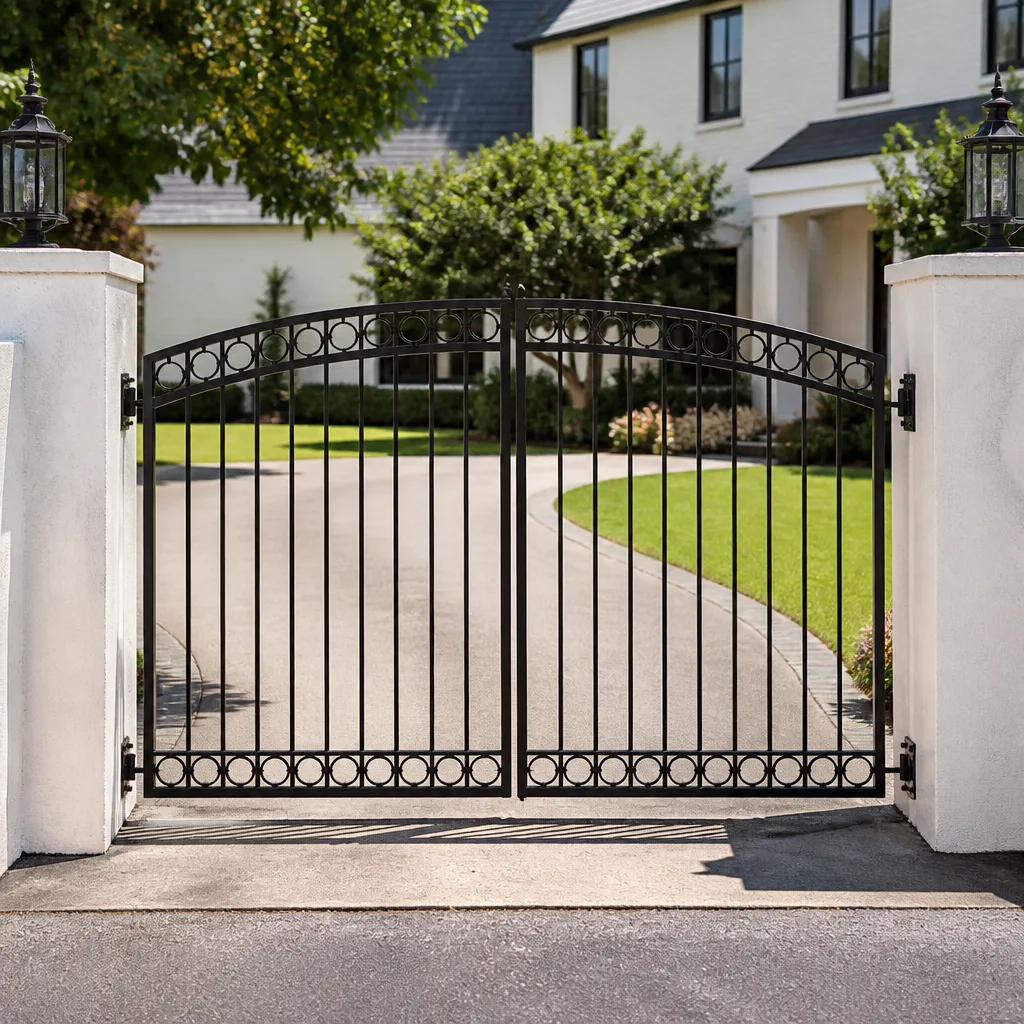
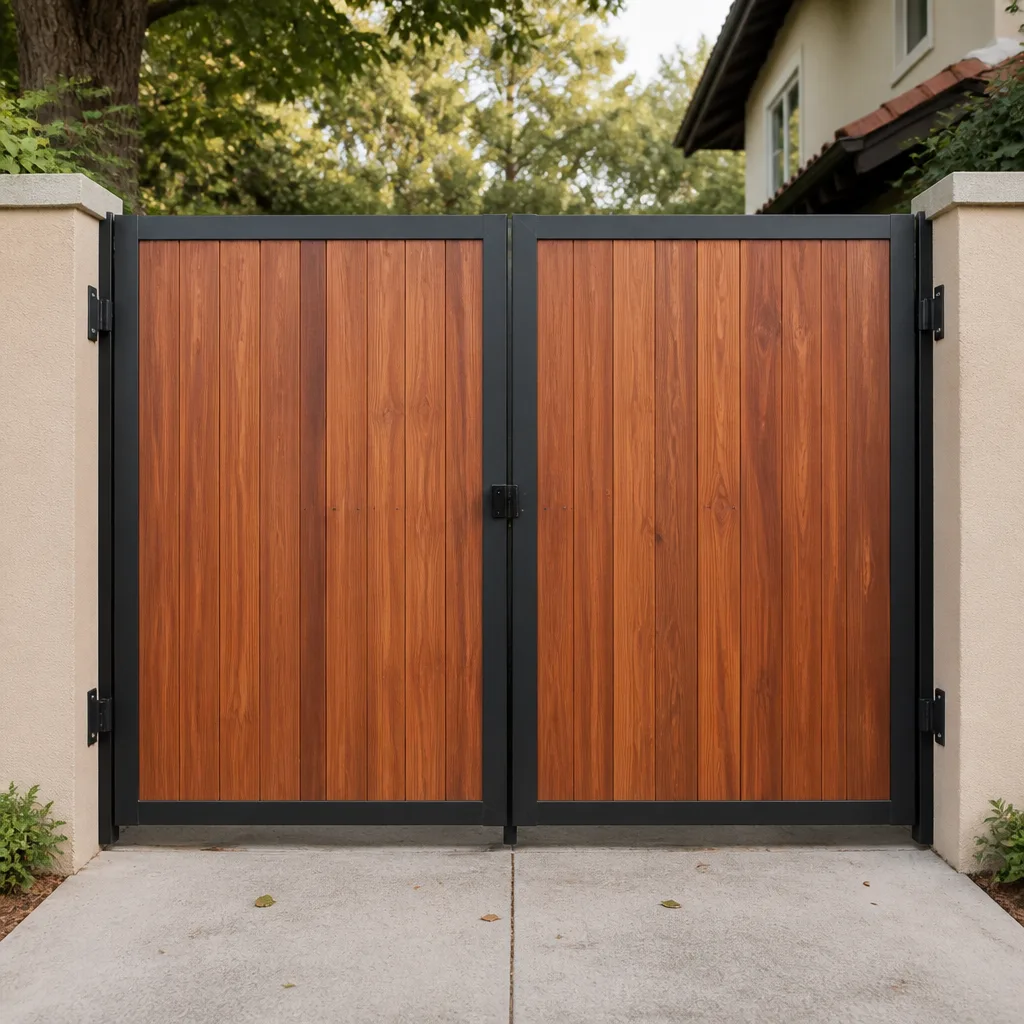
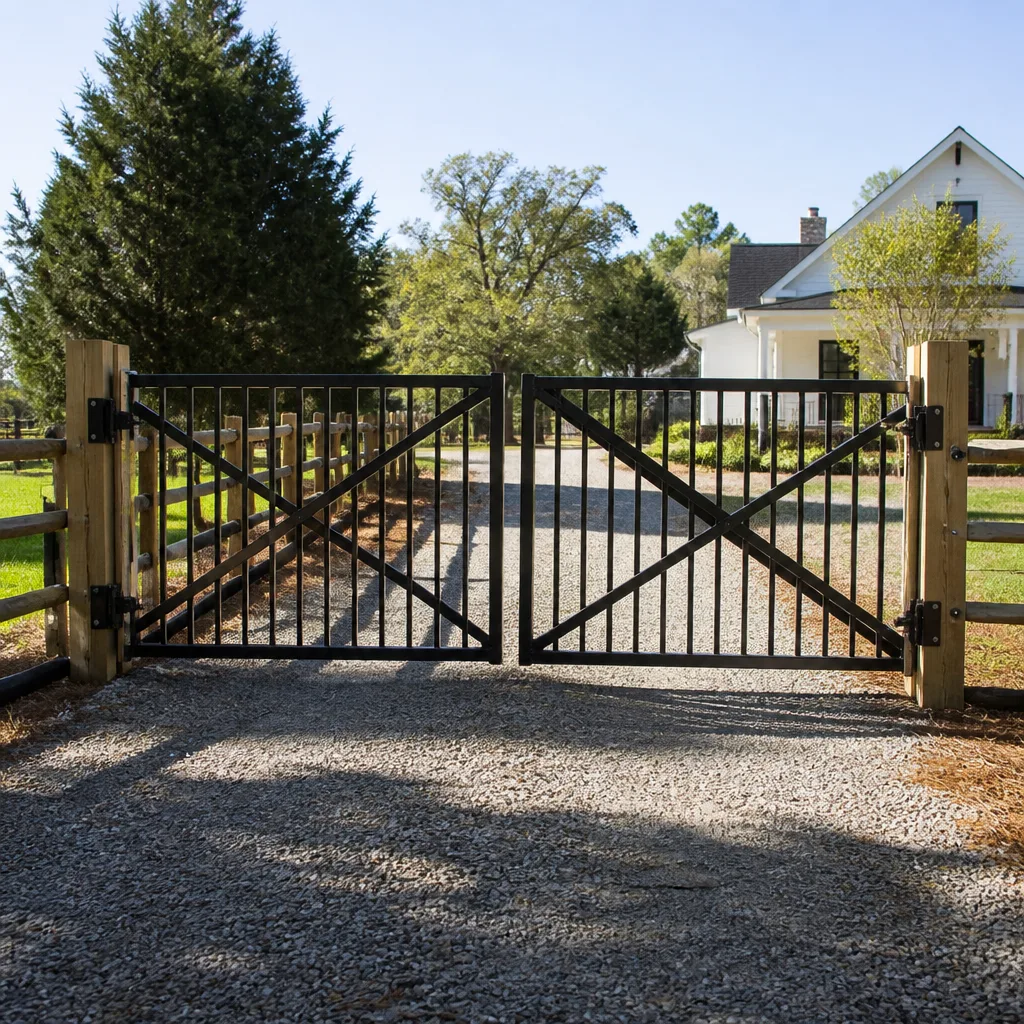
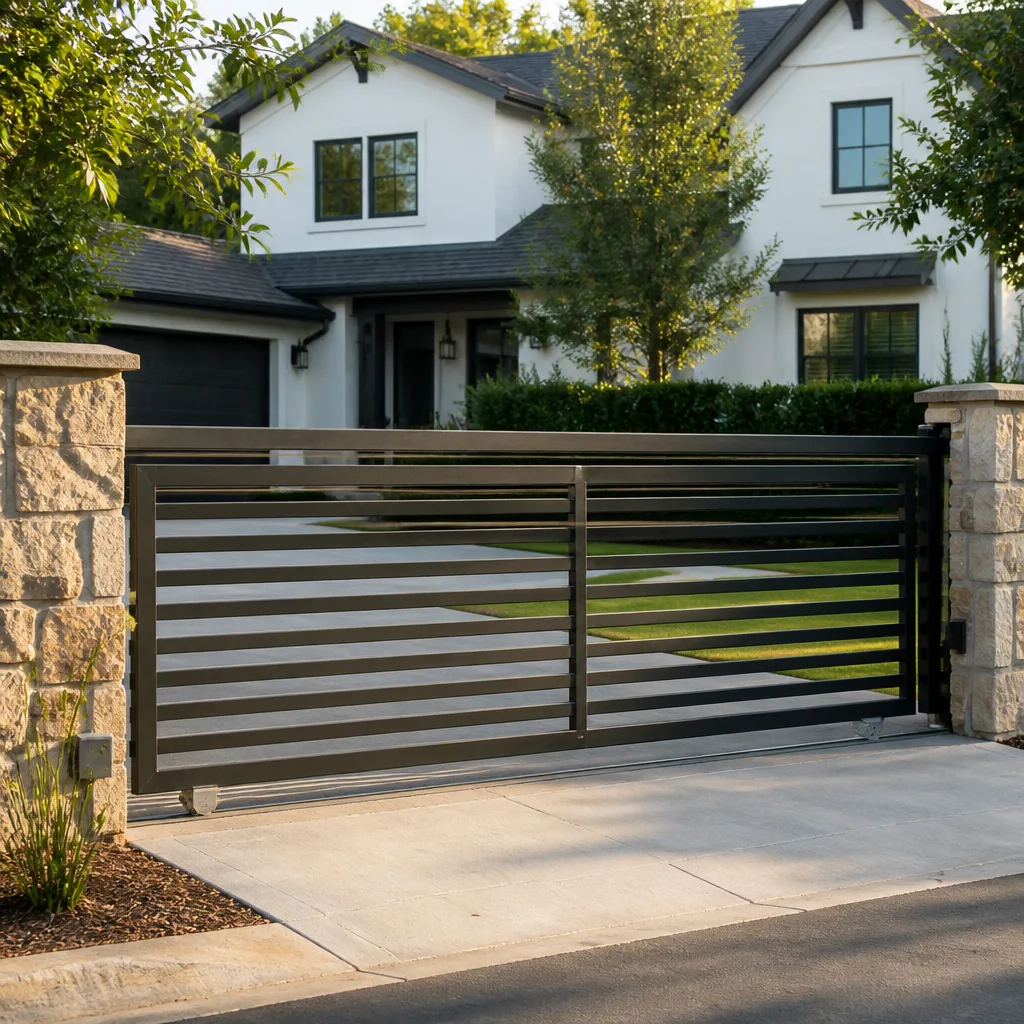
 Before
 After
After Before
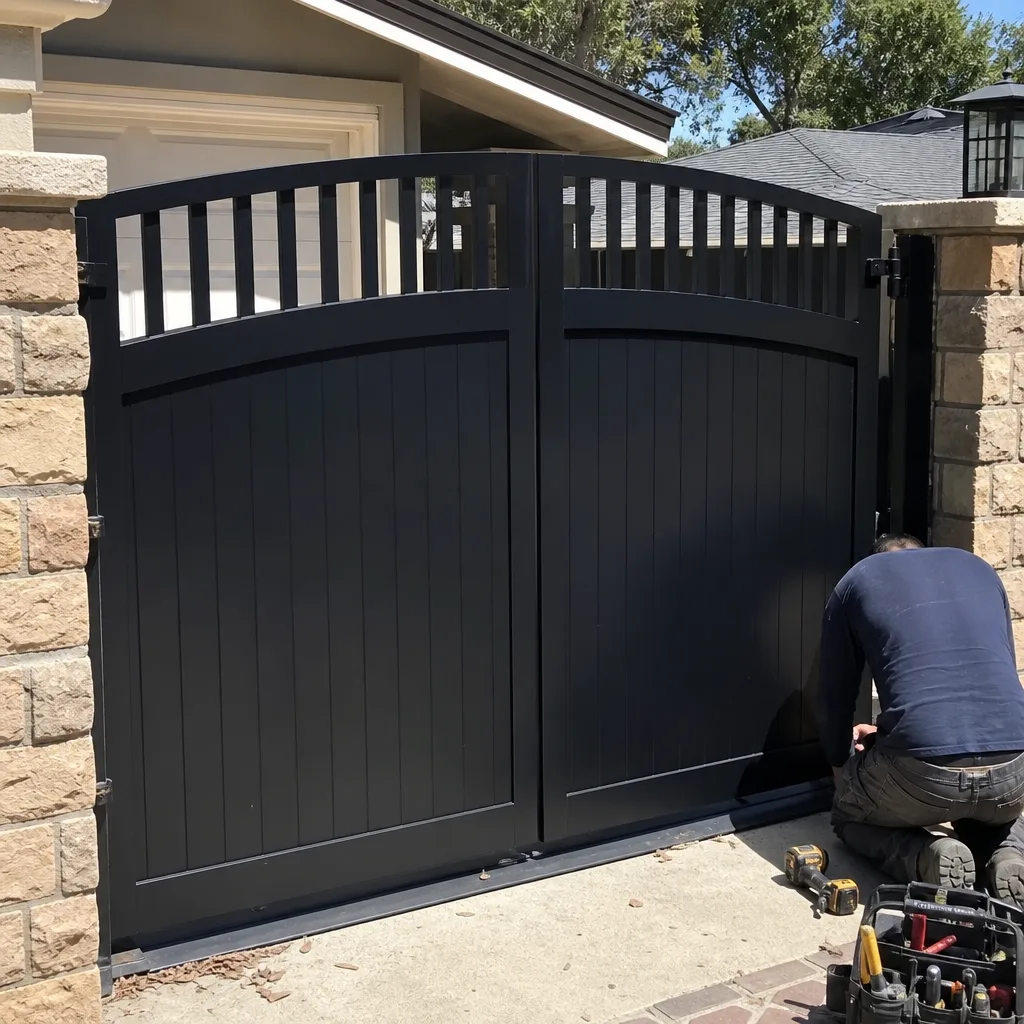 After
After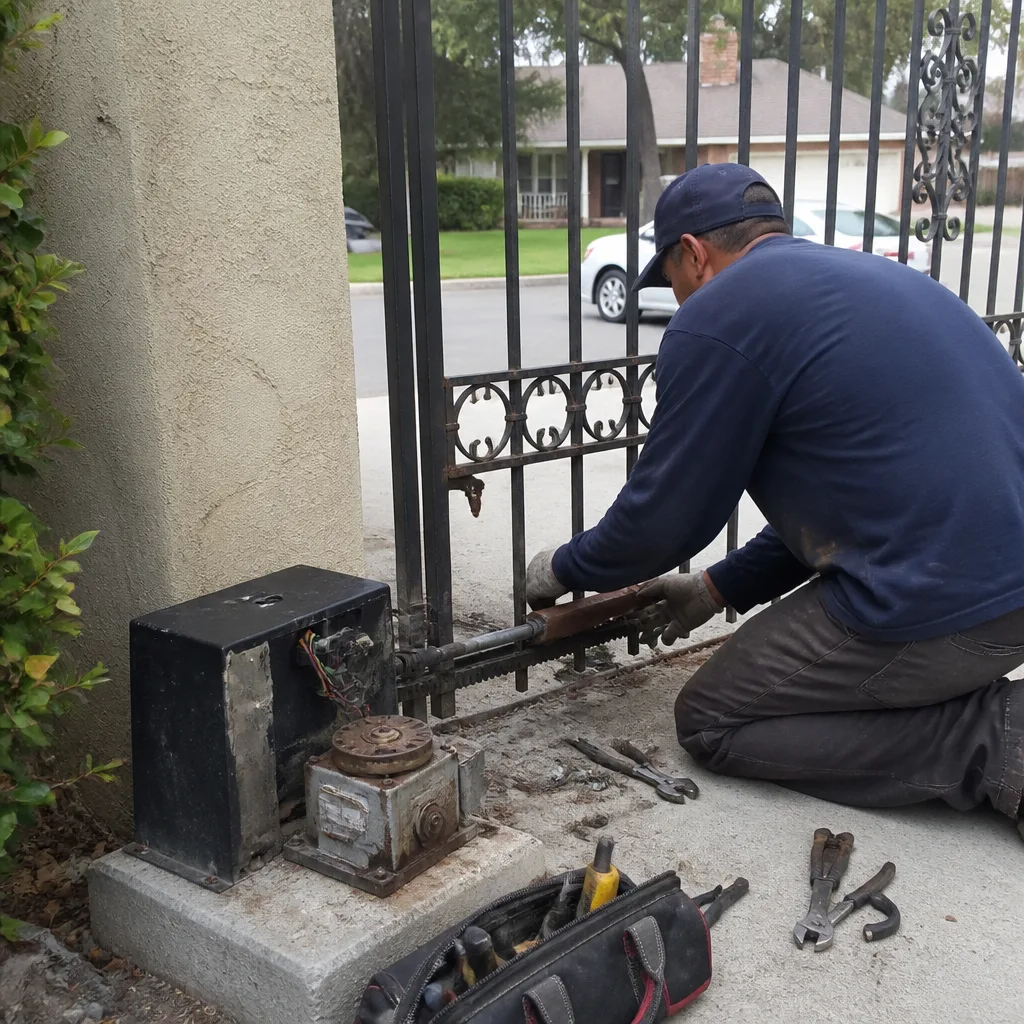 Before
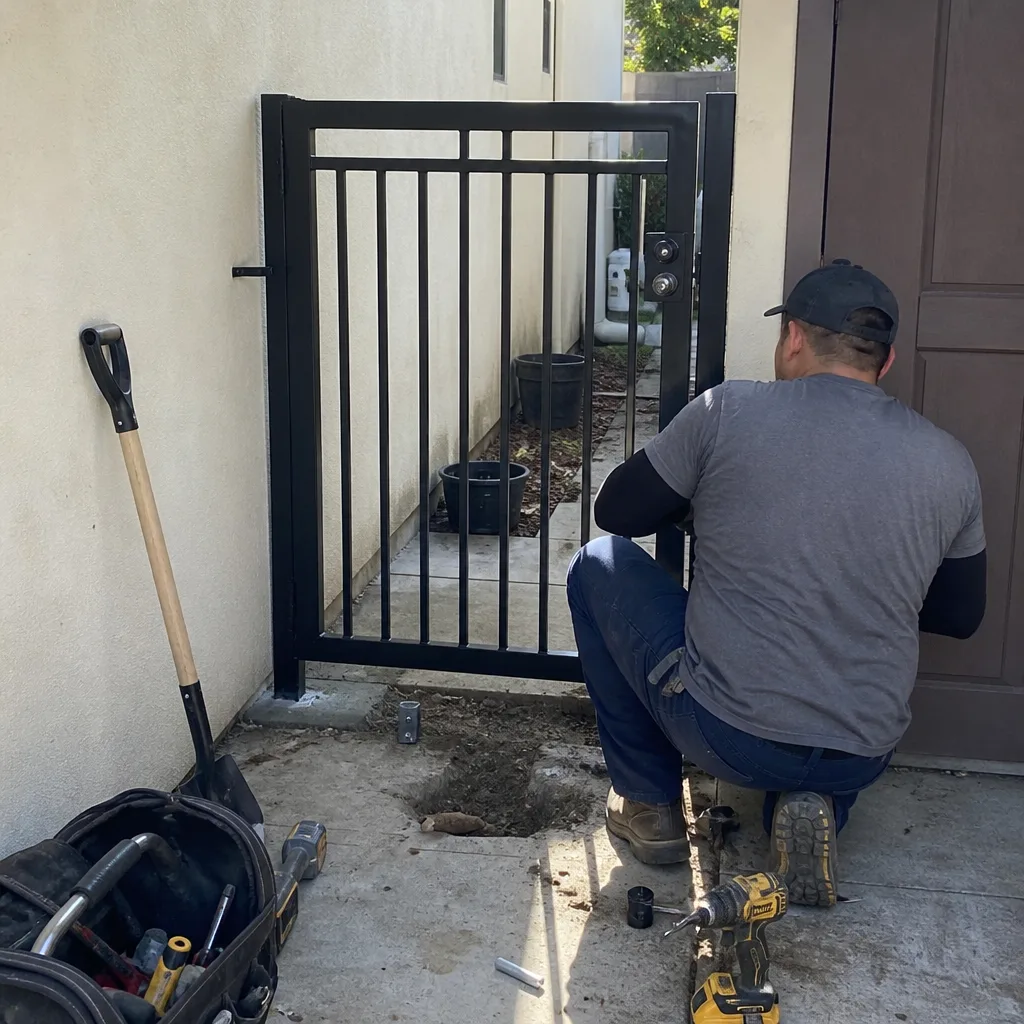 After
AfterGate Repair Permits, Codes & Inspections in CA: What You Need to Know
Most homeowners assume the permit conversation starts the day they decide to build something new. In Arcadia, we’ve learned it usually starts at a kitchen table with an escrow file open and a home inspector’s report that flags a gate that was altered years ago. The previous owner lived with it fine. The buyer’s lender now wants documentation. This guide walks through the California permit rules that actually apply to gates, where the repair-versus-alteration line sits, how HOA rules stack on top of city code, and what to do when an unpermitted gate surfaces during a sale. If you own a gate or are about to buy a house with one, some part of this will eventually apply to you.
Quick Answer
In California, a true gate repair like replacing a hinge, welding a cracked post, or swapping a gate opener motor typically does not require a permit. A permit is generally triggered when you alter the gate’s structure, change its swing direction, move or add a post, exceed height limits, or install a new gate where none existed. If you’re unsure whether your project qualifies, see our our Gate Repair services for help determining the scope. Always confirm with your local building department because cities like Arcadia layer local amendments on top of the California Building Code.
Table of Contents
- Why the Permit Question Trips Up California Homeowners
- Repair vs. Alteration: The Line That Actually Matters
- California Building Code Section 1008 and What It Means for Gates
- Arcadia Municipal Amendments: Setbacks, Height, and Swing
- HOA CC&Rs vs. City Code: Which Document Controls
- Unpermitted Gate Work at Resale: What Happens and How It Resolves
- How to Pull a Permit Yourself vs. When to Use a Licensed Contractor
- Common Mistakes to Avoid
- When to Call a Professional
- Frequently Asked Questions
- The Bottom Line
Why the Permit Question Trips Up California Homeowners
The confusion isn’t caused by complicated rules. It’s caused by the fact that nobody hands you a single document titled “Your Gate, and What You May Do to It.” Instead, you get three layers of rules that occasionally disagree: the California Building Code, your city’s local amendments, and your HOA’s CC&Rs. A homeowner in Arcadia can be fully compliant with the California Building Code and still be out of compliance with a city setback rule a neighbor has never heard of.
Add to that the fact that gate work often happens fast. A gate sags on a Friday. You want it fixed before the weekend. The person who shows up to weld it may not mention permits because, for that specific repair, no permit is needed. But if the fix involves moving a post or changing how the gate swings, you’ve crossed into permit territory without anyone saying so. That’s how unpermitted work quietly accumulates on a property and only surfaces when a home inspector or an insurance adjuster starts asking questions. For a deeper look at what to watch for, read our Gate Repair Warning Signs: A Arcadia Homeowner’s Reference Guide.
We’ve been fixing gates in Arcadia since 2001, and the pattern is consistent: the repair itself is rarely the problem. The documentation around it is. Homeowners who keep a simple paper trail, a quick photo, a dated invoice, a note about what was done, rarely face trouble later. Homeowners who can’t show when the gate was altered or who did it are the ones stuck explaining at escrow.
California treats gates as part of the property’s structure, not as furniture. That means a gate is not a temporary fixture you can modify without consequence. Insurance companies care because a gate that violates code is a liability. Lenders care because unpermitted modifications affect valuation. Buyers care because they inherit whatever wasn’t disclosed. The permit question is less about city hall and more about protecting yourself from all three.
Repair vs. Alteration: The Line That Actually Matters
The single most useful distinction in California gate work is the difference between a repair and an alteration. Repair means restoring something to its original condition without changing its size, location, height, or function. Alteration means modifying the structure, changing its footprint, relocating it, or changing how it operates. Repairs generally do not require a permit. Alterations usually do.
Here is a practical breakdown based on what we see across Arcadia:
Work That Typically Does Not Require a Permit
- Replacing a hinge or latch with a like-for-like part
- Welding a cracked steel frame in place on the existing gate
- Swapping a gate opener motor like a LiftMaster or Mighty Mule unit with a newer model of similar power and function
- Straightening a sagging gate by adjusting hinge bolts or adding a tension rod without moving the posts
- Replacing a wheel or roller on a sliding gate track
- Repainting or refinishing the gate and posts
Work That Typically Triggers a Permit
- Adding a gate where none existed, even a simple driveway gate
- Moving a hinge post to accommodate a wider opening
- Changing the swing direction from inward to outward, which may interfere with the public right-of-way
- Increasing the gate’s height beyond local limits
- Rebuilding a masonry column or pier that supports the gate
- Converting a manual gate to an automated one in some cities, though this varies by jurisdiction
The repair-versus-alteration line is not philosophy. It’s set out in California Building Code Chapter 1, Section 105, which lists exempted work. Small repairs are exempt. Anything that changes the structure’s dimensions, location, or load path is not. When we look at a gate in Arcadia, the first question we ask is not “What’s broken?” It’s “What are we changing?” If the answer is only the broken part, we proceed. If the answer involves the posts, the swing, or the height, we stop and talk about the building department.
One point worth being blunt about: a gate sags in the hinge post, not in the middle. If the post has rotted or shifted, fixing the panel without addressing the post is painting over rust. And if the post needs to be excavated and reset, that is structural work. That is where a permit conversation begins. We have seen too many Arcadia homeowners pay for a “quick fix” that held for eight months and then failed at the worst possible time because a contractor didn’t want to tell them the real repair required paperwork. At Gatewood Fence & Gate home, we’d rather tell you the truth and give you a written price than sell you a repair we know won’t last.
California Building Code Section 1008 and What It Means for Gates
California Building Code Section 1008 governs means of egress, and for gates specifically, it addresses how gates interact with paths of travel. The core principle is that a gate must not create a hazard for people entering or leaving a property. That sounds obvious, but the code gets specific about it, and the specifics are where homeowners get surprised.
The most direct answer: Section 1008 generally requires that gates serving a required exit path open in the direction of travel, meaning outward, away from the building or property. A gate that swings inward and blocks the exit path during an emergency is a code violation. There are exceptions, and local amendments can modify this, but the default is outward swing for egress gates.
For automated gates, the code layers on additional requirements. A motorized gate must have safety features that prevent entrapment, including:
- An automatic reverse mechanism that stops and reverses the gate when it encounters resistance
- Photo eyes or edge sensors that detect a person, vehicle, or pet in the gate’s path
- A manual release so the gate can be opened by hand during a power outage
- Warning signage in some configurations, particularly for commercial or multi-family properties
The entrapment rules come from UL 325, which the California Building Code incorporates by reference. A homeowner with an older FAAC or BFT opener installed before these standards tightened may be grandfathered, but if that opener is replaced, the new unit must meet current safety standards. That means a straightforward motor swap can quietly become a safety upgrade, and a good installer will explain that before the work happens, not after.
Section 1008 also addresses clear opening width. A pedestrian gate serving an egress path generally needs to provide at least 32 inches of clear width. A driveway gate doesn’t have to meet that for vehicles, but if a walk gate is built into the driveway gate, the walk portion should. We see this matter in Arcadia on older properties where a custom gate was built before the current code cycle and now can’t be modified without triggering a correction.
Here is the practical takeaway: the California Building Code is not trying to stop you from having a gate. It’s trying to make sure your gate doesn’t trap someone, block someone, or hurt someone. If your gate swings outward over the sidewalk, pinches the neighbor’s hedge, or has no reverse sensor, those are the things an inspector will look at. If you’re doing repair work on an existing gate and not changing its geometry, Section 1008 rarely bites. If you’re installing or automating, it absolutely does.
Arcadia Municipal Amendments: Setbacks, Height, and Swing
Arcadia operates under the California Building Code but adopts local amendments through its municipal code. The amendments that affect gates are typically found in the city’s zoning ordinance, not the building chapter. Here is what we’ve learned from working in Arcadia for over two decades:
Setbacks and corner lots. Arcadia’s residential zones apply front-yard setback rules to gates, particularly driveway gates. A gate cannot sit closer to the street than the setback line unless it meets specific design standards or received a variance. On corner lots, where two front yards exist, the rules tighten further because visibility at the intersection is a safety concern. A solid gate that blocks sight lines at a corner can be denied even if it meets the setback on paper. This is an Arcadia-specific concern we’ve seen play out repeatedly in the northern neighborhoods near the foothills, where lots are wider and corner exposure is common.
Height limits. The city generally limits residential fence and gate heights to 42 inches in the front yard and 6 feet in side and rear yards, with architectural exemptions available in some zones. But a gate built across a driveway is not automatically classified as a front-yard fence. Its height limit depends on its location and the articulated lot lines. Too many homeowners assume a 6-foot driveway gate is fine because side fences can be 6 feet. That assumption is wrong more often than it’s right in Arcadia.
Swing direction. Arcadia follows the California Building Code default that gates must not swing over the public right-of-way. Because many Arcadia homes have short driveways, a gate that swings outward over the sidewalk would obstruct pedestrians. That means many Arcadia driveway gates must swing inward, even though the egress principle in Section 1008 points outward. The resolution is usually an inward-swinging gate with a separate pedestrian gate that swings outward, or an automated slide gate that doesn’t swing at all. These are the details that get sorted out in a permit drawing, not over the phone.
Masonry columns and piers. If a gate is supported by brick or block columns, the city will want those columns engineered for seismic and wind loads. This is a place where we see homeowners get frustrated. The gate itself might be simple. The columns hold it up. Columns tall enough to support a 6-foot gate and wide enough to look right often require rebar, concrete fill, and a footing plan stamped by an engineer. Skipping that step is how you get a column that cracks within three years, or a gate that drags after the first real rainy season.
The practical advice for any Arcadia homeowner: before you touch a post, check the city’s document library for residential fence and gate guidelines. They’re free. Or call the planning counter. The city is not trying to hide the rules, but they won’t chase you down to tell you either. That’s on the property owner, which is exactly how unpermitted work gets passed from one owner to the next.
HOA CC&Rs vs. City Code: Which Document Controls
In Arcadia, many neighborhoods have HOA or architectural review committee rules that go further than city code. The principle is straightforward: you must satisfy both. The stricter requirement wins in practice, because violating either one has consequences.
Here’s the hierarchy we explain to homeowners:
- The California Building Code sets the floor. It applies everywhere in the state.
- Arcadia Municipal Code can add restrictions on top of the building code. It cannot loosen the building code.
- HOA CC&Rs and architectural guidelines can add restrictions on top of the city code. They cannot loosen city code, but they can absolutely be stricter than either the state or the city.
What this means in practice: a gate that is perfectly legal under Arcadia zoning can still be denied by an HOA architectural committee because it’s the wrong material, the wrong color, the wrong style, or simply because the committee has discretion written into its guidelines. We’ve watched a homeowner get city approval for a steel sliding gate and then get an HOA denial because the CC&Rs require “wrought iron ornamental style” and the committee read “steel” as non-compliant.
The document that controls depends on what you’re being cited for. If the city flags your gate, city code controls. If your HOA flags it, the CC&Rs control. Neither entity is obligated to defer to the other. That’s why the smart sequence is: check the HOA first, then the city, then start the work. HOA approval does not replace a city permit, and a city permit does not override an HOA denial.
One more point that catches people off guard: some Arcadia-area HOAs have rules about when a gate can be automated. A CC&R might permit a manual gate but require architectural review before any motor is added. If you install a LiftMaster opener on a previously manual gate without HOA sign-off, you haven’t violated city code, but you’ve handed the HOA a tool to fine you or force removal. Read the CC&Rs before you bolt on the motor. It’s the cheapest insurance you’ll never see on a bill.
Unpermitted Gate Work at Resale: What Happens and How It Resolves
The resale scenario plays out in a few predictable patterns, and none of them are pleasant if you’re the seller caught without paperwork. Here’s what we’ve observed in the Arcadia market:
Scenario one: the home inspector flags it. During the buyer’s inspection, the inspector notices a gate with fresh-looking welds, a newer opener, or a post that looks recently set. The inspector notes “possible unpermitted alteration” in the report. The buyer’s agent sends a request for repair or disclosure. The seller now has to prove the work was either permitted or exempt. If they can’t, the deal gets tense.
Scenario two: the lender’s appraiser notes it. Appraisers don’t enforce code, but they do note visible additions that appear unpermitted. If the appraiser writes “gate appears to be a recent non-permitted addition,” the lender may ask for documentation before funding. This stalls the close and sometimes kills it.
Scenario three: the title report reveals it. Less common with gates than with room additions, but it happens: a past permit search shows an open permit for fence or gate work that was never finaled. The city has it on file as incomplete. That open permit becomes a title cloud that has to be resolved before the sale can close.
How these typically resolve:
- The seller pays to have the work permitted retroactively. This means a contractor pulls a permit after the fact, the city inspects the work, and if corrections are needed, the seller pays for them. The inspection is the stressful part, because the city can require the gate to be brought up to current code, not the code from when it was built.
- The buyer and seller negotiate a credit. The buyer accepts the risk and takes a price reduction. This is common when the gate is ornamental and the risk is low, but it doesn’t make the unpermitted status go away. It just prices it in.
- The seller removes the gate. In the worst case, if the gate cannot be brought into compliance without major work, the seller takes it out and restores the opening. We’ve seen this happen exactly once in Arcadia, and it was a corner-lot gate that blocked a sight triangle and couldn’t be modified to fix it.
The lesson for homeowners: when you do gate work, get an invoice that describes exactly what was done. If the work was a repair, the invoice is your defense that no permit was needed. If the work was an alteration and a permit was pulled, keep the final inspection sign-off with your property records. The paper is worth more than the gate, and it costs almost nothing to keep.
If you’re on the buying side, this is a place where a Gate Repair in Arcadia specialist can help you understand what you’re seeing. A gate that looks fine can hide a rotting post, an underpowered opener, or a weld that was never cleaned and painted. Before you negotiate a credit, know what the gate actually needs. If you’re selling, the same inspection works in your favor: fix the obvious issue before the buyer’s inspector finds it, and you’ve removed a negotiation point entirely.
How to Pull a Permit Yourself vs. When to Use a Licensed Contractor
A homeowner in California can pull a permit for work on their own primary residence, including gate work, if they do the work themselves or hire someone under their supervision. That doesn’t mean it’s always a good idea. Here’s the honest breakdown:
When pulling your own permit makes sense
- The scope is simple. You’re installing a standard swing gate with no automation, no masonry columns, and no structural modifications. The gate hangs on existing posts. Your drawing is clear. The risk of plan rejection is low.
- You have the time. You can visit the building department during business hours, wait for plan review, schedule inspections, and meet the inspector on site. In Arcadia, that process typically runs two to four weeks for a simple gate permit, depending on current load.
- You’re not planning to sell within a few years. If the permit process drags, it’s your schedule, not a closing date.
When a licensed contractor should pull the permit
- The gate is automated. The electrical run, the safety sensors, the operator brand and specs, and the UL 325 compliance all belong on the permit. A contractor who installs openers every week knows what the plan reviewer in Arcadia will ask for before you submit. That saves you one or two rejection cycles.
- The gate has masonry columns. Unbraced columns require an engineered footing. A contractor pulls the engineer into the process from day one, and they know the local engineers who stamp gate plans quickly.
- The gate is on a corner lot or a slope. Sight-triangle rules and topographical issues create plan-review friction. Experienced gate contractors in Arcadia have worked these exact parcels and know how to show compliance on the drawing.
- You’re doing a larger project that includes the gate. If the driveway is being redone, the front walk is moving, or a fence is being replaced, a single permit for the whole scope is cleaner than piecemeal permits. A licensed general contractor overlays the gate onto the same plan set.
The most important distinction: a permit pulled in your name makes you the responsible party. The inspector sees you as the builder. If the work fails, you own the correction order. A permit pulled by a licensed contractor puts their license on the file, and the contractor is the one the city calls back. That accountability has real value when the work involves a gate operator from a brand like FAAC or BFT that requires specific torque settings and limit adjustments to pass the safety portion of the inspection.
One point that gets overlooked: pulling a permit and passing inspection is rarely the end. The city needs to close out the permit, meaning the final inspection gets logged and the file is closed. An open permit, even for good work that passed inspection, shows up as incomplete. We’ve walked into Arcadia homes where the previous contractor did the work, passed the final, and never filed the close-out. The owner thought everything was done. The city said otherwise. If you pull your own permit, follow it through to the final sign-off and keep that paper.
If you’re considering a gate project, we give free estimates in Arcadia and can tell you honestly whether your job is a permit job or not before you spend a day at the planning counter. You can also explore more guides & resources on gate permits, repairs, and Arcadia-specific requirements. No charge for the conversation. Hal has been doing this since 2001 and he’d rather tell you straight than watch you get caught later.
Common Mistakes to Avoid
- Assuming all gate work is repair work. Replacing a hinge is a repair. Moving that hinge post back three inches is an alteration. The difference determines whether you need a permit, and guessing wrong is how unpermitted work begins.
- Skipping the HOA check before the city check. We’ve watched Arcadia homeowners get city approval and HOA denial in the same week. Check the CC&Rs first because HOA review usually takes longer than city plan review.
- Installing an automated gate without UL 325-compliant safety features. A used Mighty Mule opener from a garage sale may not meet current entrapment standards. If that gate closes on a child or pet, the code violation becomes a liability claim.
- Letting a handyman reset a gate post without a permit or engineering. A gate post set in concrete without a proper footing will lean within a season or two. By then, the handyman is gone and the post is your problem at escrow.
- Failing to keep the close-out paperwork. A final inspection that was never logged at the city is an open permit. Open permits cloud title. Keep the sign-off in the same file as your deed.
- Building a taller gate to match a side fence. Front-yard height limits in Arcadia are different from side-yard limits. Just because the fence along your property line is six feet doesn’t mean the driveway gate across the front can be.
When to Call a Professional
If your gate involves a sagging post, a cracked weld in a critical joint, a gate opener that slams or doesn’t reverse, or any change to the gate’s geometry, stop and get an experienced gate contractor involved. These are the jobs where a small error becomes a structural failure or a safety hazard, and the repair cost multiplies after the fact. High-tension springs and heavy steel panels can release stored energy suddenly; that’s a job for a trained professional with the right equipment, not a weekend project. If you’re in Arcadia, Gatewood Fence & Gate offers free estimates. Call (626) 628-9548 and Hal or one of his crew will look at the gate in person, tell you what it needs, and tell you honestly whether a permit is part of the job. No charge for the estimate, no pressure, and no surprise invoice at the door. The price is quoted and agreed before any work starts.
For a full gate replacement, a new gate installation, or an opener upgrade, we can walk you through the permit sequence and answer the questions the city will ask before they ask them. We’ve been working in Arcadia long enough to know the local plan reviewers and what they’ll flag. If you’d rather read before you call, start with our Gate Installation in Arcadia guide or the Gate Motor & Opener in Arcadia page for specifics on automation requirements.
Frequently Asked Questions
No, a simple repair like replacing a hinge, latch, wheel, or opener motor on an existing gate does not require a permit, as long as you’re not changing the gate’s size, height, location, or swing direction. When in doubt, call your city’s building department and describe the repair. Call (626) 628-9548 for a free assessment in Arcadia, and we’ll help you determine whether your job is a repair or an alteration before you spend time at the planning counter.
Arcadia generally limits front-yard gates to 42 inches in height, though specific zones and architectural exemptions can raise that. Side and rear gates may go to 6 feet. A driveway gate’s limit depends on setback and lot lines, so check the city’s fence and gate guidelines or call the planning department for your specific address.
Yes. An HOA can be stricter than city code, and its architectural review is a separate approval. You need both. The city permit doesn’t override the HOA’s CC&Rs, and HOA approval doesn’t replace a city permit. Check both before you start any visible gate work.
Permit fees vary by the valuation of the work and the specific scope. A simple residential gate permit in Arcadia can range from roughly $150 to $500 in city fees, not including engineering if masonry or automation is involved. For an exact number, the city’s permit counter can quote your address and scope. Call (626) 628-9548 and we can help you scope the permit correctly the first time, so you don’t pay for a re-submittal.
The most common resolution is that the seller pays to permit the work retroactively, negotiates a credit with the buyer, or in rare cases removes the gate. The retroactive permit process means the city inspects the work against current code, which can require changes. Keeping dated invoices for any gate work is your best defense, because it shows whether the work was a repair or isn’t.
This depends on your city. Adding an opener to an existing manual gate may not require a permit in some jurisdictions, but the opener’s electrical circuit and safety features must meet code, and many cities treat the automation as altering the gate’s function, which triggers a permit. Arcadia, in our experience, treats new electrical work on gates as requiring review. Call the building department and the folks at (626) 628-9548 before you buy the opener.
The Bottom Line
California gate permits are manageable if you understand the repair-versus-alteration line and check the right documents before the work starts. The California Building Code sets the floor, Arcadia adds local rules on height, setback, and swing, and your HOA can be stricter than both. Unpermitted work surfaces at resale, and the fix is always more expensive after the fact than the paperwork would have been up front. Keep invoices, close out any permits you open, and when a job is beyond a simple repair, get someone who has done it before. Hal Gatewood has been fixing and building gates in Arcadia since 2001, and he’ll give you a straight answer and a written price before any work starts. Call (626) 628-9548 with your gate question; that’s the fastest way to know where you stand.
Written by Hal Gatewood, Owner at Gatewood Fence & Gate, serving Arcadia since 2001.