
Last updated August 26, 2026
Free on-site gate assessment - hinges, posts, and your LiftMaster or Nice gate operator checked before anything is quoted
The assessment is free and the quote is the invoice.
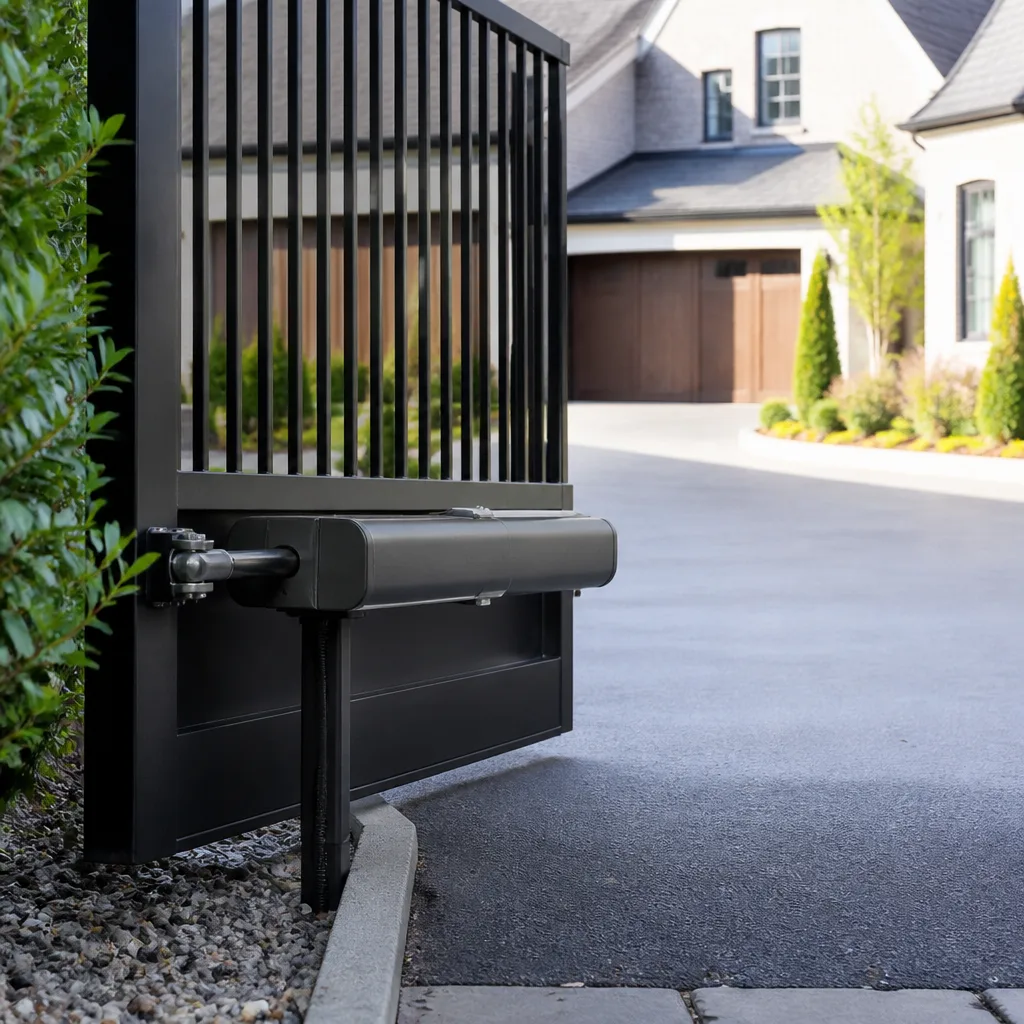
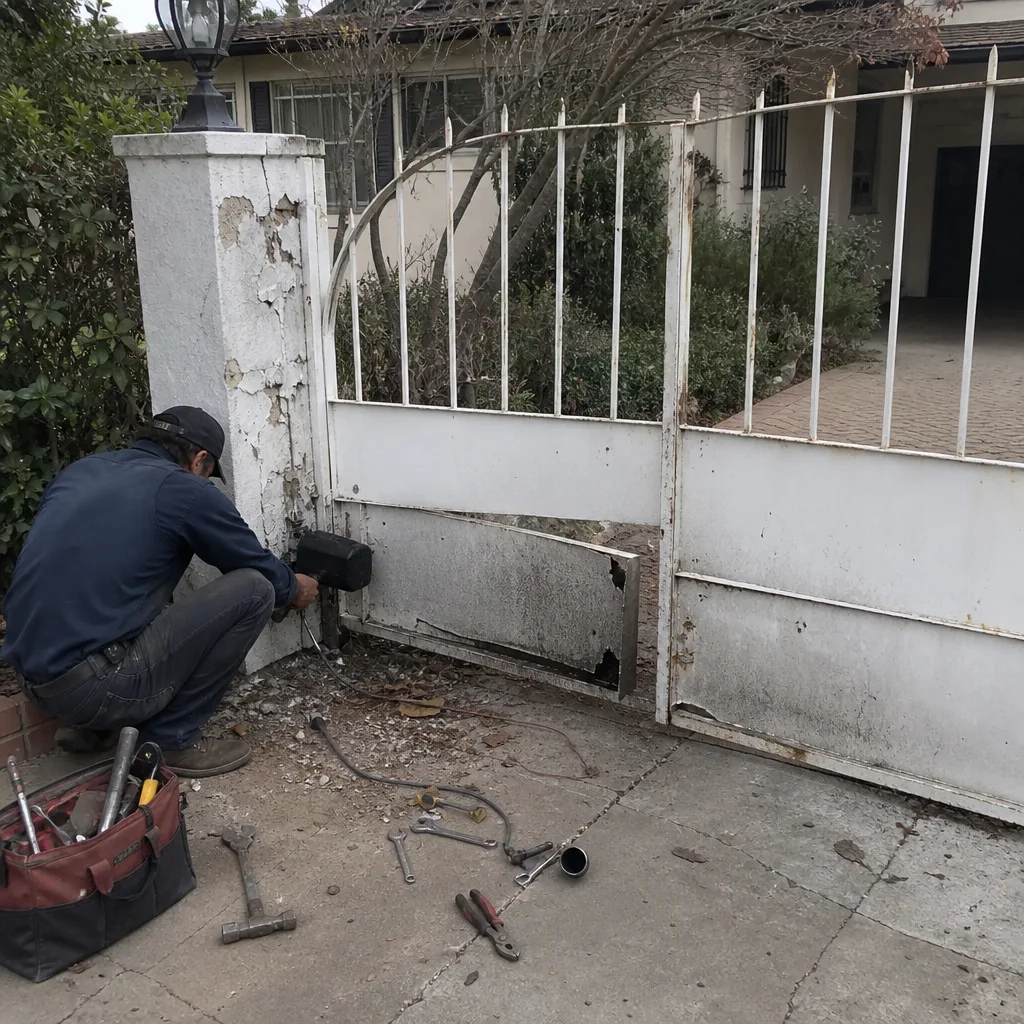 Before
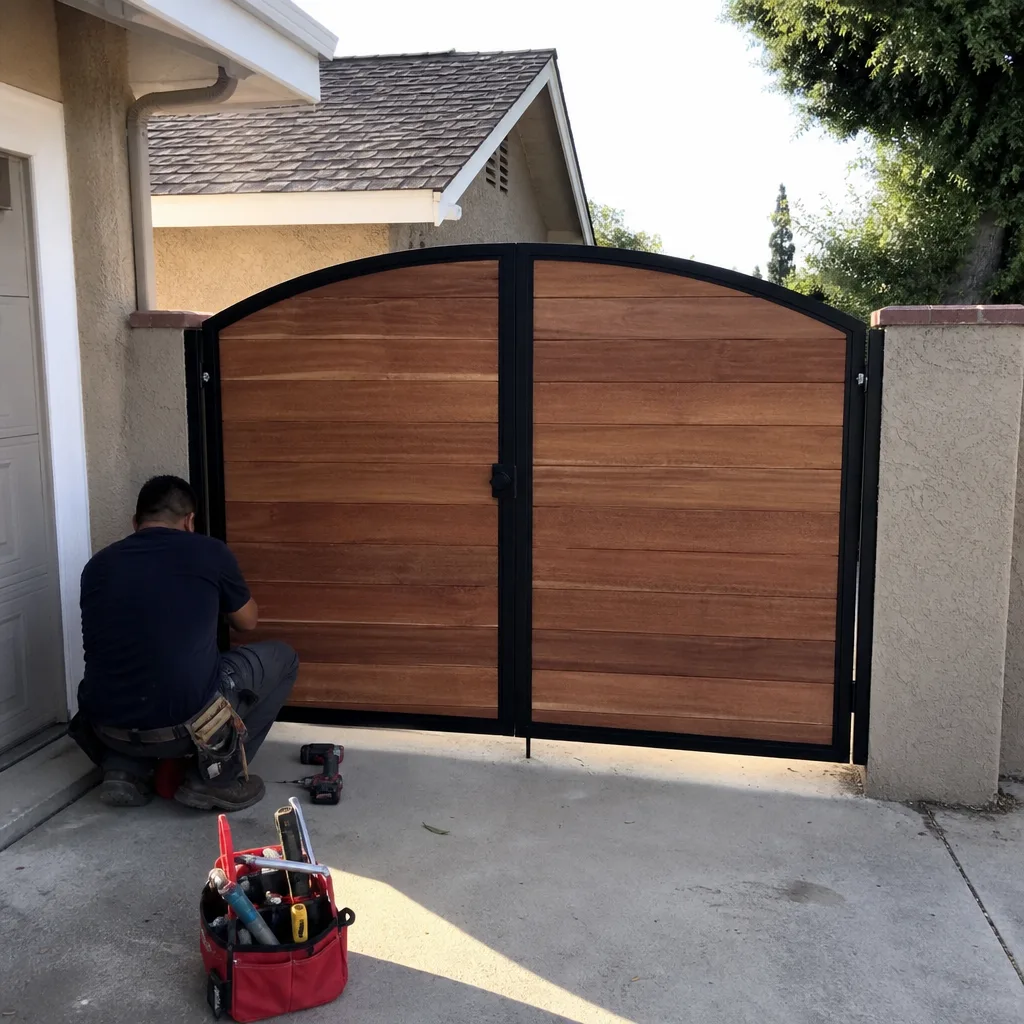 After
After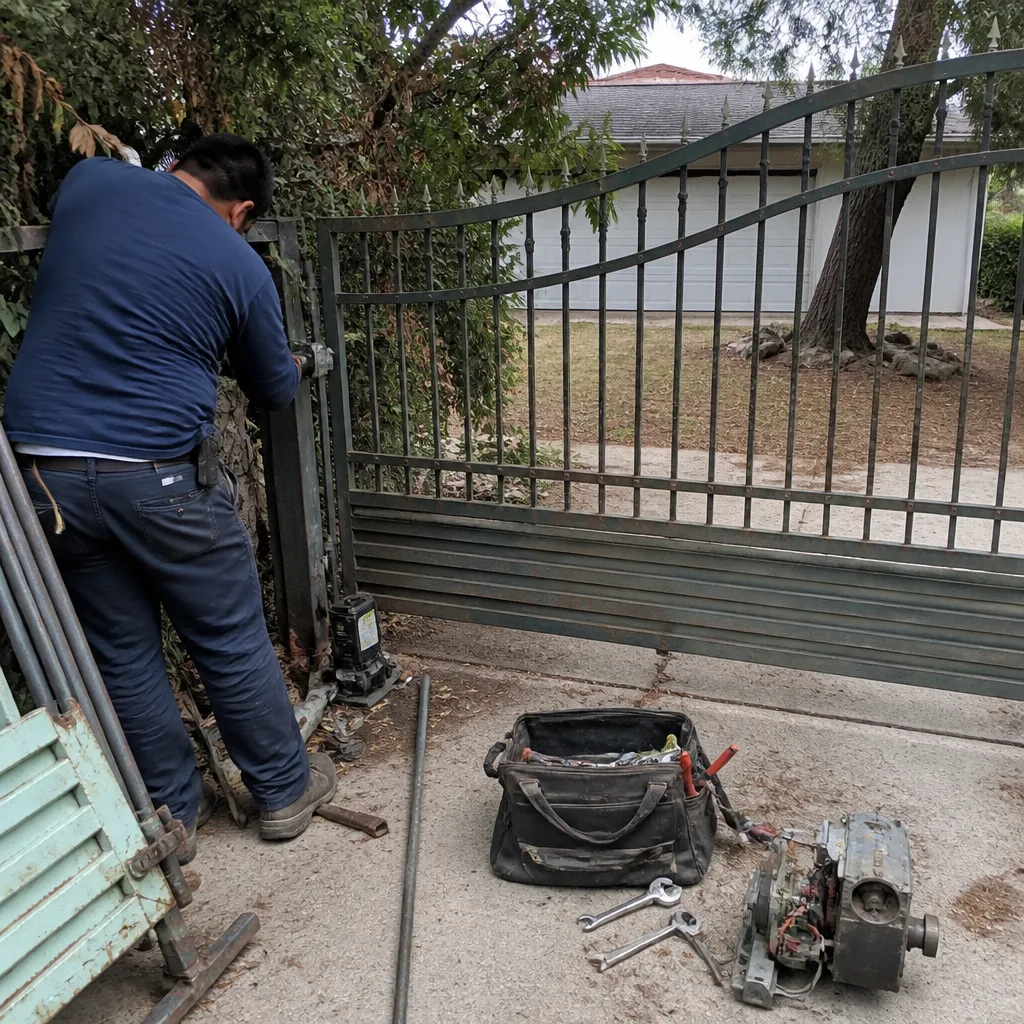 Before
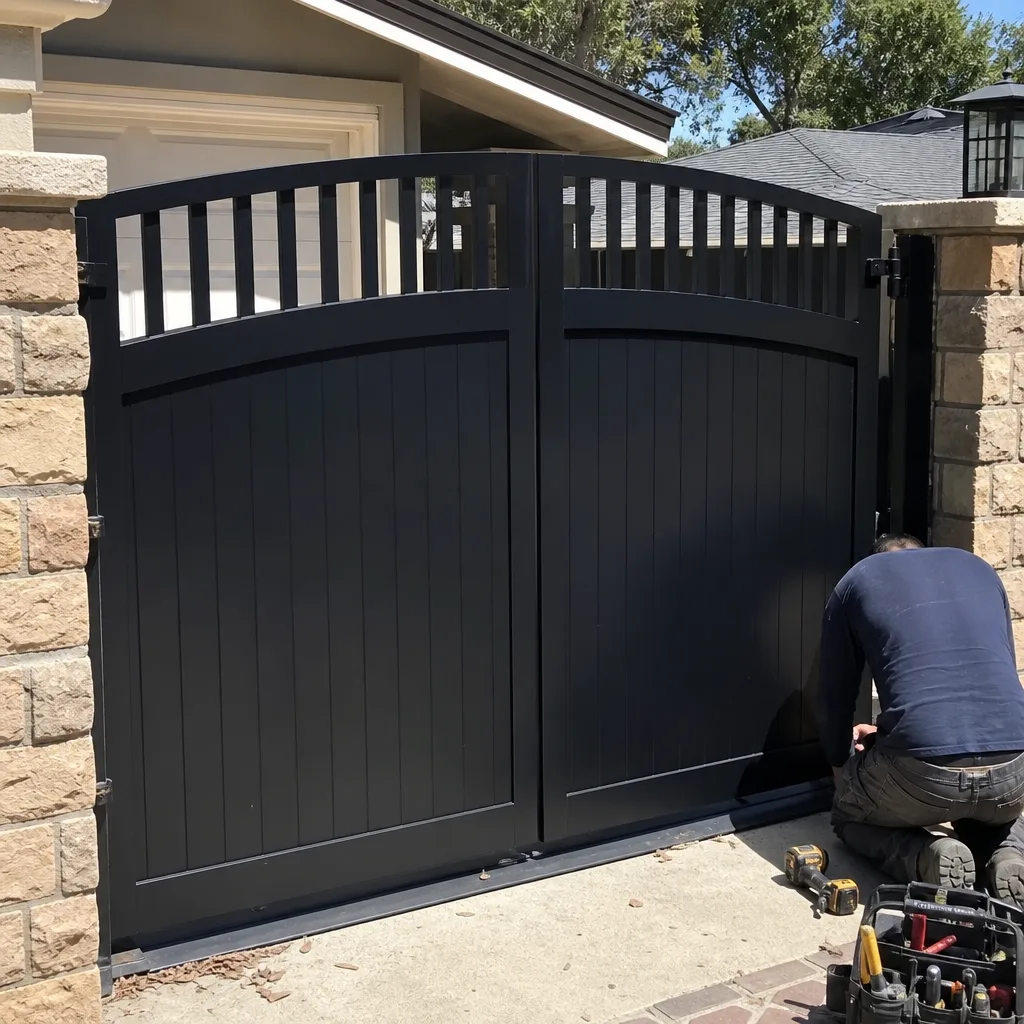 After
After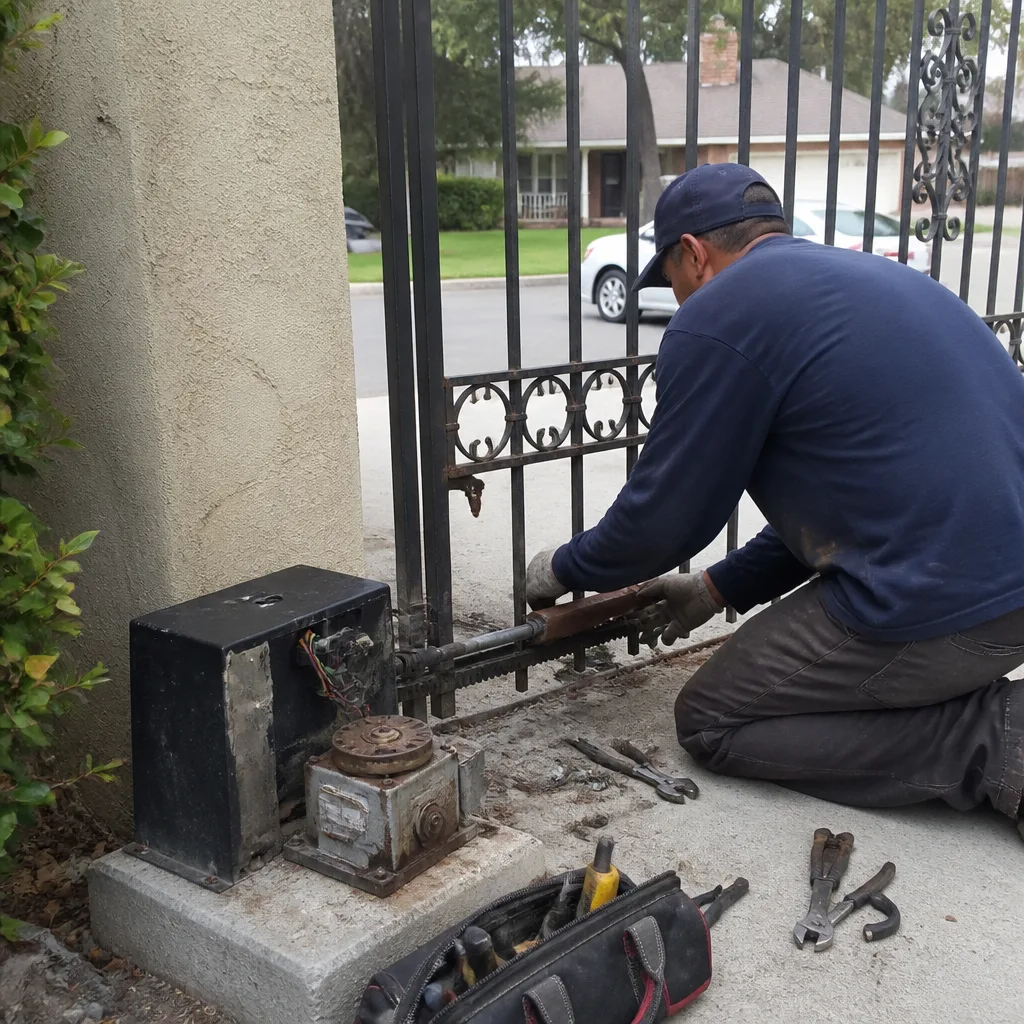 Before
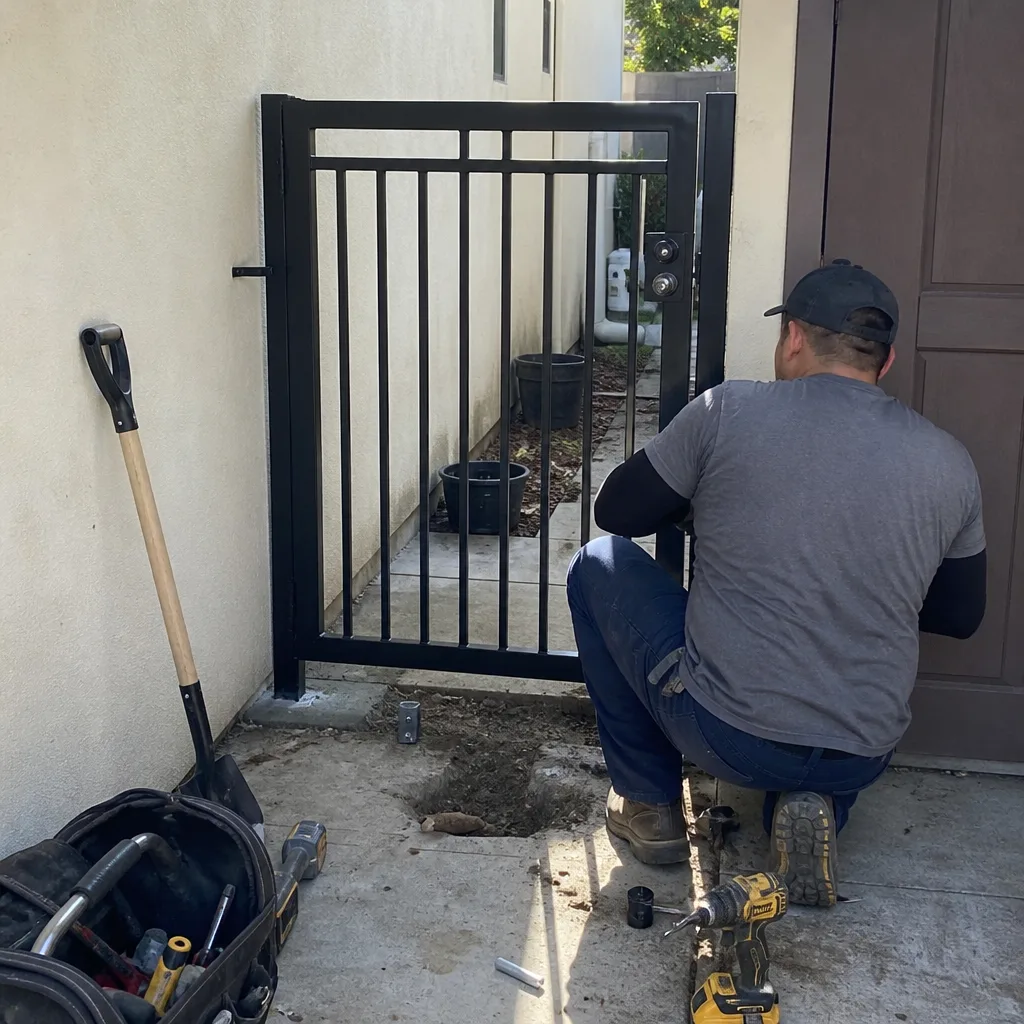 After
AfterGate Repair Warning Signs: A Arcadia Homeowner’s Reference Guide
Most gates don’t die suddenly. They announce their failure weeks or months ahead of time, but the signs are quiet and easy to misread. A gate that hesitates for half a second before moving is not ‘just getting old’ – that half-second pause is a motor working harder than it should, and Hal can usually predict within a few weeks when it’ll stop entirely. The problem is that most homeowners in Arcadia have been taught to watch for the big, obvious failures while the low-grade symptoms are the ones that actually predict what’s about to break. This guide covers the warning signs competitors miss: the sounds, the visual tells, and the behavioral quirks that show up long before a gate stops moving for good. For seasonal gate repair care in Arcadia, check our year-round homeowner’s guide.
Quick Answer
The clearest early warning signs of gate failure in Arcadia are a change in operating noise, a half-second or longer delay between pressing the remote and the gate responding, visible rust at weld seams or hinge plates, and a post that has drifted off plumb by more than a degree or two. Catch these symptoms early and you’re usually looking at a repair measured in hundreds of dollars, not a full replacement measured in thousands. Call Gate Repair in Arcadia for a free estimate the moment you notice any of them.
Table of Contents
- The Five Sounds a Gate Makes and What Each One Means
- Visual Warning Signs Most People Walk Right Past
- Behavioral Signs: Lag, Travel, and Reversal
- Why ‘It Still Works’ Is Not the Same as ‘It’s Fine’
- Red-Yellow-Green: A Homeowner’s Triage Guide
- What Arcadia Weather and Soil Do to Gates
- Common Mistakes to Avoid
- When to Call a Professional
The Five Sounds a Gate Makes and What Each One Means
Every gate has a voice. A healthy gate makes a low, steady hum that’s easy to tune out. When something starts to fail, the sound changes in a specific way – and each change points to a specific component. Here’s what we’ve learned from fixing gates in Arcadia driveways since 2001: a gate will tell you exactly what’s wrong if you know how to listen.
1. A high-pitched squeal that rises as the gate moves
That’s metal rubbing against metal without enough lubrication, and it’s the most common early warning on Arcadia gates. The sound usually comes from hinge pins, the gate track, or the roller bearings. A squeal means friction has increased, and friction means the motor is working harder to move the same weight. Left alone, a squealing hinge will wear an oblong hole in the hinge plate within six to twelve months and then the gate will sag. The fix early is ten minutes of service. The fix late is a welded hinge repair or a panel replacement.
2. A grinding or crunching sound when the gate starts or stops
This is different from a squeal. Grinding means the gear teeth inside the operator or the chain drive are no longer meshing cleanly. Something is out of alignment, and with every cycle the metal is shaving off a little more of itself. On a LiftMaster or Linear opener, this is often the first sign of a worn gearbox. On a chain drive, it usually means the chain has stretched and is skipping on the sprocket. This is not a sound to monitor – it’s a sound to act on. Every cycle is doing damage that makes the eventual repair more expensive.
3. A rhythmic thump-thump-thump while the gate is moving
That’s a wheel or roller with a flat spot, or a bent section of track. Think of it like driving a car on a tire with a bulge. The gate still moves, but every revolution is pounding a single point in the system. On Arcadia driveway gates, flat rollers are most common after a vehicle bumps the gate or after years of the gate sitting closed half the time. The thump is mechanical stress concentrating in one spot. The fix is a new roller set, and it’s one of the least expensive repairs we do.
4. A deep, low groan with no other symptoms
A groan usually lives in the post, not the gate. It’s the sound of the hinge trying to work under a load it’s no longer supporting correctly. When a post begins to lean – even a fraction of a degree – the gate’s entire weight shifts and the hinges are forced to work out of plane. The groan is the hinge binding under that off-axis load. This is one of the most missed warning signs we see in Arcadia because the sound isn’t sharp, so people assume it’s normal aging. It isn’t. A groaning hinge is a post problem in its early stages.
5. Silence where there used to be a hum
If the gate used to make a soft mechanical sound when moving and now it’s silent, that’s not an improvement. It means something that used to move smoothly is now seizing. On a Viking or Ghost Controls opener, silence often means the motor has stopped engaging entirely and the gate is coasting on residual momentum. It might complete a cycle or two, then stop dead. Call us the first time you notice that change. A silent motor is never a healthy motor.
Visual Warning Signs Most People Walk Right Past
You don’t need to be a welder to read a gate’s condition. You just need to know where to look. At Gatewood Fence & Gate, we tell every Arcadia homeowner the same thing: the gate panel will lie to you about its age, but the hinges, the welds, and the post base never will. Here are the visual symptoms that actually matter.
Paint bubbling in specific spots – not just anywhere
Bubbling paint across the whole panel is usually a prep problem from the last paint job and means nothing mechanically. But bubbling paint at hinge plates, weld joints, or the bottom corners of the panel is rust working its way outward from inside the joint. Trapped moisture has gotten between two pieces of metal and the oxidation is pushing the paint off the surface. In Arcadia’s climate, with its summer heat and the occasional marine layer morning, the thermal expansion and contraction makes this cycle worse. On a gate that’s welded rather than bolted, bubbled paint at a weld seam is often the first visible sign that the weld is losing integrity underneath.
Hairline cracks at weld seams
A hairline crack in a weld is the gate telling you exactly where it will fail. Metal fatigue starts as a microscopic crack and grows with every cycle of movement. On a double swing gate in Arcadia, the highest stress points are the weld joints where horizontal rails meet the stiles on the hinge side. Look for a thin, dark line running through the paint at those joints in a zigzag or stair-step pattern. That pattern is classic fatigue propagation. It’s not a surface scratch – it goes into the metal. If you can catch it while the crack is still hairline, a good welder can repair it in place in under an hour. Wait until it propagates and the panel splits, and now you’re talking about a much bigger job.
Post tilt you can measure with a phone
Every smartphone has a level app. Open it, set the phone flat against the vertical face of the hinge post, and read the degree. A perfectly plumb post will read zero. One degree is noticeable and worth watching. Two degrees is failing. Three degrees means the post’s footing has been compromised and the gate is now loading the hinges out of plane. In Arcadia, we see post tilt all the time on gates installed before the 1990s when footings were often poured undersized. The tell is subtle if you only look at the gate position, because the gate may still look level-ish while the post carries the lean. Measure the post itself. Not the panel.
Dirt mounds or cracks at the post base
After a heavy rain, look at the ground where each post enters the concrete or soil. A small pile of fresh soil or a widening crack in a concrete collar means the post is working in its footing. It’s rocking a tiny amount with every gate cycle. The gate still moves, so nobody thinks anything’s wrong. But the rocking motion is widening the cavity around the footing every week. Eventually the whole post shifts suddenly and the gate drops. In Arcadia’s clay-heavy soil that expands and contracts with moisture, post rocking is one of the most predictable failures we see.
Behavioral Signs: Lag, Travel, and Reversal
The way a gate moves tells you more than how it looks. Movement is mechanical honesty. When something inside is failing, the behavior changes in ways that are easy to detect once you know what normal feels like. A healthy gate responds to the remote in under a second, travels at a consistent speed through the whole opening, and never reverses course unless something really is in the way.
Response lag: the half-second that predicts failure
Press the remote and count. A healthy opener fires the motor in under one second. If there’s a half-second or longer pause between the click and the first movement, something is struggling. On a DoorKing operator, lag often means the capacitor in the control board is weakening and the motor is straining to reach starting torque. On any brand, lag can also mean the mechanical load has increased – a dry hinge, a dragging wheel, a panel that’s binding – and the motor is hesitating under the extra resistance. The important part: lag is never a setting or a personality trait. It’s a symptom. We’ve seen gates in Arcadia go from a half-second lag to total stopped in under a month.
Partial travel: the gate that doesn’t open all the way
If the gate used to open wide enough for two cars and now it stops a foot short, there are two common mechanical explanations. The first is limit switch drift on the opener – the internal mechanism that tells the motor where to stop has worked out of position and needs recalibration. That’s an inexpensive fix. The second is mechanical binding near the end of travel, where a wheel hits a rust-bumped section of track or a hinge reaches the end of its worn range and the motor’s safety sensor trips early to avoid overload. The gate is still protecting itself, but it’s protecting itself because something is wrong.
Reversal without obstruction
A gate that starts to close and then reverses as if it sees an obstacle, when there’s nothing there, is usually sending its earliest distress signal. The safety sensor sends a load signal to the control board when resistance spikes. If the board is seeing false load spikes because the mechanical system is binding, it responds the only way it knows how – by reversing. Homeowners often assume the sensor needs cleaning, and sometimes that’s true. But when cleaning doesn’t fix it, the bigger culprit is almost always mechanical drag or a failing drive train. The gate is working around a problem instead of through it. That’s not a fix. That’s a delay.
Why ‘It Still Works’ Is Not the Same as ‘It’s Fine’
This is the most important section in this guide, because it’s the one most Arcadia homeowners haven’t heard. A gate that works but is louder than it used to be is already in failure mode. The relationship between noise and wear is direct. Every mechanical system has a baseline sound – the frequency and volume of normal operation. When it gets louder, it means components are working harder against each other, and that wear is compounding.
Here’s the plain version: the amount of extra noise is roughly proportional to the amount of extra friction in the system. Friction is mechanical energy being converted into heat and wear instead of movement. A gate that’s twice as loud as it was last year is dissipating significantly more energy through friction, and that friction is consuming the parts most people never inspect – the rollers, the hinge bushings, the chain tensioners, the gear teeth. The gate keeps moving until one of these parts reaches its limit and lets go. Then it’s not louder anymore. It’s stopped.
Think of it like driving a car with a bad wheel bearing. The car still drives. It just makes noise. You can ignore that noise for months, maybe a year. Then one day the bearing seizes and the wheel locks up at speed. Gates work the same way. The noise is not the problem – it’s the announcement of the problem. The problem is the wear that’s already happening. By the time a gate is audibly louder, the repair is already more expensive than it would have been at the first sign of trouble.
We tell the folks we work for in Arcadia the same thing every time: if you can hear the difference, call us. Even if it’s still opening and closing. Especially if it’s still opening and closing. And if you’ve got a written estimate from anyone else, we’ll give you a Gate Motor & Opener in Arcadia service check and a second opinion for free.
Red-Yellow-Green: A Homeowner’s Triage Guide
Not every warning sign requires a service call today. But some do. Here’s how to sort what you’re seeing and hearing into three buckets: keep an eye on it, schedule something soon, or stop using the gate now. For how to hire a gate repair contractor in Arcadia, see our step-by-step guide. This is the exact framework we use when a Arcadia neighbor calls and asks whether they need us today or next week.
Green: Monitor at Home
These signs are early, lightweight, and something you can track yourself for a few weeks without making anything measurably worse:
- Faint squeal that disappears after a rain (moisture change, not yet dry-metal wear)
- Post tilt under one degree on the phone level
- Slightly louder operation that you just noticed this month
- Hairline paint crack at a weld that’s not deep enough to catch a fingernail
- A gate that pauses for a beat only on the very first cycle of the day
Yellow: Schedule a Service Call Within Two Weeks
These symptoms indicate progressive wear that compounds with use. Waiting longer reliably increases the repair scope:
- Grinding sound at start or stop, every cycle
- Response lag of half a second or more, consistently
- Visible rust at hinge plates or bottom panel corners
- Post tilt between one and two degrees
- Reversal without obstruction that happens more than once a week
- Thump-thump rhythm while moving
When the gate hits one of these, call us at Gate Installation in Arcadia for a free estimate. Every repair over $200 gets $40 off, and there’s no trip charge inside the county. We’ll come look, tell you exactly what’s failing and what it’ll cost to fix, and nothing gets started until the price is written down and agreed to.
Red: Stop Using the Gate Immediately
These are failure-in-progress conditions. If the gate runs, cycle it manually or disconnect it and leave it open or closed, but don’t keep using the opener:
- Deep groan from the hinge post – the post is actively moving in its footing
- Visible crack at a weld that’s open enough to catch a fingernail, or any crack that’s growing
- Post tilt past two degrees
- Gate that shudders or jumps while moving
- Motor that runs but the gate doesn’t move at all
- Any grinding accompanied by a burning or electrical smell
Stop using the opener and call the shop. We answer the phone around the clock at (626) 628-9548. A live person answers, not a voicemail.
What Arcadia Weather and Soil Do to Gates
Every place has its own way of breaking gates, and Arcadia has a few tricks worth knowing about. The combination of inland heat, morning marine layer, and clay-heavy soil creates failure patterns we don’t see in coastal cities or colder climates. Understanding these local conditions helps you spot trouble earlier, because you know what’s normal for here and what isn’t.
Thermal cycling and paint integrity
Arcadia summer days routinely swing 30 degrees or more between mid-afternoon and pre-dawn. Steel expands in the heat and contracts in the cool. Over even a single season, that cycle stresses every weld, every bolt, every joint on a driveway gate. Paint doesn’t stretch as much as the metal under it, so it cracks first on the highest-stress joints. Those hairline cracks aren’t just cosmetic – they’re entry points for moisture, and moisture is how rust starts. In Arcadia, a painted steel gate that’s never been inspected will show its first weld-stress cracks within five to seven years, faster if it’s a dark color facing west.
The marine layer’s subtle effect
Arcadia sits far enough inland that salt corrosion isn’t a daily threat the way it is at the beach, but the morning marine layer still pushes damp air up against the foothills several mornings a month. That consistent moisture cycle means unprotected welds and bolt heads rust faster here than they do ten miles farther inland in El Monte. It also means hinges dry out and pick up surface rust in specific seasons. A hinge that’s dry in October will be noticeably worse by March.
Clay soil and the rocking post problem
The soil under Arcadia is heavy with clay, which absorbs water in winter and shrinks in summer. Footings that were poured to code still shift as the soil around them expands and contracts. A post that was plumb when it was set in July can measure a degree off by February simply from seasonal soil movement. The gate doesn’t care why the post moved – it just knows the hinges are no longer in perfect line. That’s why we measure post plumb on every service call, even when the customer called about something else entirely. A sagging gate in Arcadia is usually a post problem, not a panel problem.
Common Mistakes to Avoid
- Lubricating a grinding gate. It seems logical, but if there’s already metal-to-metal wear, adding lubricant just hides the sound while the wear continues. The relief is temporary and the masking makes it harder to diagnose. What a grinding gate needs is an inspection, not a spray can.
- Ignoring post tilt because the gate still closes. We hear this from Arcadia homeowners all the time: “It closes, so it can’t be that bad.” Post tilt is compounding. Every cycle makes the footing worse. By the time it can’t close, the footing has to be re-poured instead of braced.
- Painting over rust without treating the metal underneath. Rust doesn’t stop just because it’s covered. It keeps oxidizing under the paint and pushes the new layer off from underneath. The tell is that the bubble comes back within a season.
- Replacing the opener without checking the mechanical load. If your gate has worn rollers or dry hinges, the excess friction that killed the old motor will shorten the life of the new one too. Always have the mechanical system checked before replacing the operator.
- Waiting for the gate to stop completely before calling. The most expensive Arcadia gate repairs we do are the ones where the homeowner waited through every warning sign on the list. A $200 hinge repair becomes a $2,500 panel replacement if you let it go.
- Testing the gate by hand and assuming it’s fine. A gate that moves easily by hand doesn’t tell you anything about the motor’s load or the condition of the drive train. The motor experiences forces that your arm doesn’t. Many failing operators live on gates that swing freely when pushed manually.
When to Call a Professional
If your gate is showing any yellow or red signs from the triage list, it’s time. A sagging post, a gate that shudders, a motor that groans or hesitates – these are not things to watch. They’re things that get worse with every cycle. We handle gate repair, gate installation, gate motor and opener service, access control, and on-site welding for gates that might otherwise be headed to the scrap pile. Hal welds in the driveway so the gate never leaves your property, and every job carries the 90-Day Done Right Promise in writing. Gatewood Fence & Gate offers free estimates in Arcadia – call (626) 628-9548 and you’ll talk to a live person, day or night.
Frequently Asked Questions
An opener that’s due for maintenance typically sounds the same as always but responds slightly slower. An opener that’s failing usually makes a new sound – a grind, a whine, or a groan – and hesitates before starting. The sound is the tell. Maintenance doesn’t fix a sound the gate has never made before.
In our experience, the most common Arcadia gate repair is a sagging panel caused by a hinge post that has drifted off plumb in the area’s clay soil. The post moves, the gate drops, and the latch no longer lines up with the receiver. Fixing the post properly means the latch works again.
Adjusting the hinges only works if the hinge plates themselves have loosened on the post or panel. If the post is tilted or the hinge wear plates are worn through, hinge adjustment will hold for a few weeks at most before the gate drops again. You’re adjusting around the problem instead of fixing it.
Most Arcadia gate repairs fall between $200 and $600 depending on the component and the extent of the repair. Hinge replacement, roller sets, and limit switch calibration are on the lower end. On-site welding and post footing work run higher. Every repair gets a written price before work starts, and repairs over $200 take $40 off.
We’re certified to service nine major brands, including DoorKing, Linear, Viking, and Ghost Controls. If you have a gate operator we don’t recognize by name, send a photo of the nameplate and Hal can usually tell you exactly what it is and whether it’s worth repairing.
Call (626) 628-9548. We answer the phone around the clock and we’ll tell you honestly what the situation looks like and when we can get to you. If it’s an emergency and we can fit you in, we’ll say so. If we can’t make it today, we’ll tell you that straight instead of leaving you waiting.
The Bottom Line
A gate gives you a long runway before it fails. The signs are there: a sound that wasn’t there before, a post that’s drifted off plumb, a half-second pause before the motor catches up, a hairline crack in a weld that grows a little every month. The homeowner’s job is not to fix any of it. It’s to notice the change early and call someone who can. In Arcadia, gates fail along predictable patterns because of the clay soil, the thermal swings, and the morning moisture. Knowing those patterns means you can read the warning signs before the gate stops moving entirely, and that’s the difference between a repair and a replacement. Browse our more guides & resources for Arcadia homeowners.
Written by Hal Gatewood, Owner at Gatewood Fence & Gate, serving Arcadia since 2001.